Tooth Hurts When I Bite Down? Common Causes, Treatment & When to See a Dentist
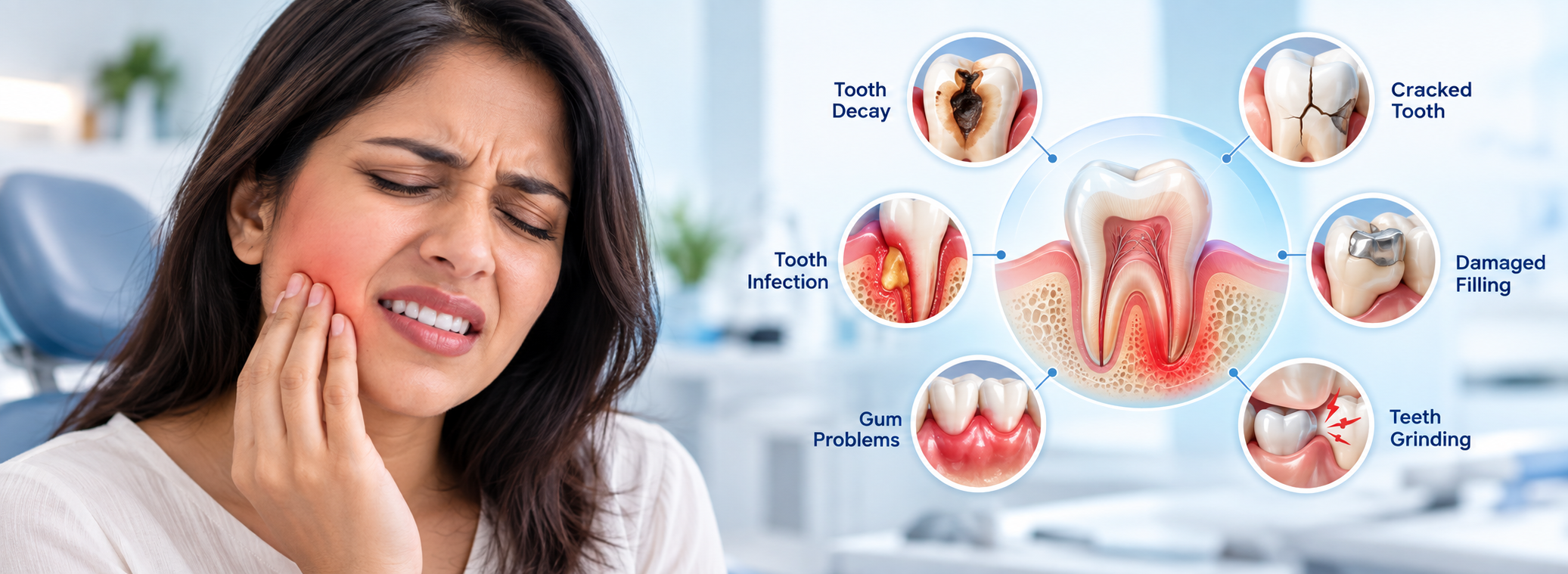
Tooth hurts when I bite down? This type of dental pain may be caused by tooth decay, a cracked tooth, a loose or damaged filling, inflammation around the root, gum problems, teeth grinding, or a dental infection.
For some people, the discomfort appears only when chewing hard foods. Others may experience sharp pain while biting, pain when releasing the bite, sensitivity to hot or cold foods, swelling, or a dull ache that continues even after chewing.
Because several dental problems can produce similar symptoms, pain alone cannot always reveal the exact cause.
A dentist may need to examine the tooth, check your bite, evaluate the gums, perform pulp tests, and use dental X-rays when appropriate.
If your tooth hurts when you bite down, early evaluation can help identify the problem before it becomes more complicated.
Why Does a Tooth Hurt When You Bite Down?
Biting places pressure on:
- The tooth structure
- Dental pulp
- Periodontal ligament
- Jawbone around the tooth
- Existing fillings or crowns
- Gum tissues surrounding the tooth
If any of these structures are irritated, inflamed, infected, cracked, or damaged, pressure from chewing may trigger discomfort.
The type of pain can provide useful information.
For example:
- Sharp pain while biting may be associated with a cracked tooth or damaged restoration.
- Pain when releasing the bite may occur with certain cracks.
- Persistent tenderness can occur when tissues around the root are inflamed.
- Pain with swelling may suggest infection.
- Pain after a filling or crown may indicate bite-related pressure or irritation within the tooth.
However, symptoms frequently overlap.
That is why self-diagnosis based only on the type of pain is unreliable.
Quick Answer: What Causes Tooth Pain When Biting?
If your tooth hurts when I bite down search brought you here, the most common possible causes include:
- Tooth decay or a deep cavity
- Cracked tooth
- Dental abscess or tooth infection
- Inflammation around the tooth root
- Loose, broken, or damaged filling
- Pain after a new filling or dental crown
- Gum or periodontal disease
- Teeth grinding or clenching
- Excessive bite pressure
- Dental trauma
The correct treatment depends entirely on the underlying diagnosis.
1. Tooth Decay or a Deep Cavity
Tooth decay is one of the most common dental problems and can sometimes cause pain while chewing.
A small cavity may initially produce no symptoms.
As the decay progresses through the enamel and reaches the dentin, the tooth may become more sensitive.
If it gets deeper and approaches the dental pulp, which contains nerves and blood vessels, the discomfort can become more significant.
What Does Cavity Pain When Biting Feel Like?
You may experience:
- Pain while chewing
- Sharp discomfort
- Sensitivity to sweets
- Hot or cold sensitivity
- Food getting stuck around the tooth
- A dull ache
- Pain that becomes worse over time
A cavity does not always cause constant pain.
Some patients notice discomfort only when food presses into the affected part of the tooth.
How Is Tooth Decay Treated?
Treatment depends on how far the cavity has progressed.
Possible options may include:
- Dental filling
- More extensive restoration
- Crown in selected cases
- Root canal treatment if the pulp is irreversibly affected
- Extraction when a tooth cannot reasonably be restored
Early cavities are generally easier to manage than advanced decay.
2. Cracked Tooth
A cracked tooth is another important reason why a tooth hurts when you bite down.
Cracks may occur because of:
- Biting hard foods
- Chewing ice
- Dental trauma
- Large existing restorations
- Teeth grinding
- Clenching
- Age-related wear
- Repeated heavy chewing forces
Some cracks are easy to identify, while others can be difficult to see.
Why Does a Cracked Tooth Hurt When You Bite?
When pressure is placed on a cracked tooth, the separated parts of the tooth may flex or move slightly.
This movement can irritate the pulp or supporting tissues.
The pain may then disappear when biting stops.
Some patients experience pain specifically when releasing pressure.
Common Symptoms of a Cracked Tooth
Possible symptoms include:
- Sharp pain when chewing
- Pain when releasing a bite
- Hot or cold sensitivity
- Intermittent discomfort
- Difficulty identifying exactly which tooth hurts
- Sensitivity when chewing specific foods
Cracked-tooth symptoms may come and go.
This sometimes causes people to postpone dental treatment because the tooth feels normal between episodes.
How Is a Cracked Tooth Treated?
Treatment depends on:
- Crack location
- Crack depth
- Amount of remaining healthy tooth structure
- Condition of the dental pulp
- Whether the crack extends below the gum line
Possible treatments may include:
- Dental restoration
- Crown
- Root canal treatment in selected cases
- Extraction if the crack makes the tooth unrestorable
Early diagnosis can improve the chances of preserving the tooth where possible.
3. Dental Abscess or Tooth Infection
A dental infection can make a tooth extremely tender when pressure is applied.
An abscess may form when bacteria reach the pulp and infection spreads toward tissues surrounding the root.
In such cases, chewing or tapping on the tooth may feel uncomfortable.
Signs of a Dental Infection
Possible symptoms include:
- Persistent toothache
- Pain while biting
- Gum swelling
- Facial swelling
- Tenderness around the tooth
- Bad taste
- Pus or drainage
- Fever
- Feeling generally unwell
- Sensitivity to temperature
Not every tooth infection produces all these symptoms.
Some infections cause pain mainly during biting.
How Is a Dental Abscess Treated?
Treatment depends on the source and severity of the infection.
Options may include:
- Root canal treatment
- Drainage
- Tooth extraction
- Other dental procedures
Antibiotics may sometimes be prescribed when there are specific signs of spreading infection or systemic involvement.
However, antibiotics alone do not usually eliminate the underlying dental cause.
4. Inflammation Around the Tooth Root
Sometimes the actual tooth structure is not the only reason for pain.
The tissues surrounding the root may become inflamed.
This includes the periodontal ligament, which helps connect the tooth to the supporting bone.
Can a Tooth Hurt Only When Pressure Is Applied?
Yes.
You may feel completely comfortable while resting, but experience pain when:
- Biting
- Chewing
- Tapping the tooth
- Applying pressure
Inflammation around the root can make the tooth feel slightly raised, tender, or sensitive.
Possible causes may include:
- Pulp inflammation
- Dental infection
- Bite trauma
- Recent dental treatment
- Excessive grinding or clenching
Your dentist may perform clinical tests to determine which tissues are involved.
5. Loose, Broken, or Damaged Filling
A damaged filling can also explain why a tooth hurts when you bite down.
Fillings do not necessarily last forever.
Over time, they may:
- Wear down
- Crack
- Become loose
- Chip
- Lose their seal
- Develop gaps around the edges
When this happens, the underlying tooth may become sensitive.
Food particles and bacteria can also enter gaps around the filling.
Signs of a Damaged Filling
You may notice:
- Pain when chewing
- Hot or cold sensitivity
- Food getting stuck
- Rough edges
- Missing pieces of filling
- Sharp areas
- A different feeling when your teeth come together
A dentist can determine whether the filling needs to be polished, adjusted, repaired, or completely replaced.
6. Tooth Pain After a New Filling
It is not unusual to experience some temporary sensitivity after dental treatment.
However, if your tooth hurts when you bite down after a filling, the restoration should be evaluated if the pain persists.
One possible reason is that the filling may be slightly high.
If the treated tooth contacts the opposing tooth before the others do, excessive biting pressure can make it tender.
Other causes may include:
- Pulp irritation
- Deep decay before treatment
- Cracks
- Problems with the restoration
- Existing tooth inflammation
When Should You Contact Your Dentist?
Arrange a dental review if the pain:
- Is severe while chewing
- Becomes progressively worse
- Does not improve
- Occurs spontaneously
- Causes prolonged hot or cold sensitivity
- Prevents normal chewing
Treatment depends on the cause.
Sometimes a simple bite adjustment may help, while other cases require additional evaluation.
7. Tooth Pain After a Dental Crown
A newly placed crown may occasionally feel sensitive during the adjustment period.
However, persistent biting pain should be checked.
Possible causes include:
- Bite that is too high
- Inflammation of the underlying tooth
- Loose crown
- Cracked tooth underneath
- Cement-related irritation
- Pulpal problems
If your crown feels uncomfortable every time you close your teeth together, contact your dentist for an evaluation.
8. Gum or Periodontal Problems
Not all pain that feels like a toothache actually originates from inside the tooth.
Gum disease and inflammation of the supporting tissues can also cause discomfort during chewing.
Signs of Gum-Related Tooth Pain
You may experience:
- Bleeding gums
- Gum swelling
- Gum recession
- Tooth mobility
- Persistent bad breath
- Tenderness around a tooth
- Discomfort when chewing
- Food trapping
Advanced periodontal problems may affect the support around a tooth, making chewing uncomfortable.
A periodontal examination can help determine whether the gums or supporting bone are contributing to the pain.
9. Teeth Grinding and Clenching
Teeth grinding, medically known as bruxism, can place excessive stress on the teeth.
Some people grind or clench during sleep and are completely unaware of it.
Others clench their teeth during stressful situations or concentration.
Repeated excessive forces can make teeth and supporting tissues tender.
Signs You May Grind Your Teeth
Possible symptoms include:
- Tooth tenderness
- Jaw soreness
- Flattened or worn teeth
- Chipped teeth
- Morning headaches
- Jaw stiffness
- Muscle tenderness
- Pain while chewing
Your dentist may identify wear patterns or other signs of excessive bite pressure.
Treatment depends on the cause and severity.
10. Trauma to the Tooth
A tooth that has been injured may become painful when biting even if it does not look visibly broken.
Trauma may occur from:
- Sports injuries
- Accidental falls
- Biting unexpectedly hard foods
- Direct impact
- Dental accidents
The tissues around the tooth may become inflamed after trauma.
In some cases, the pulp can also become damaged.
Even if the tooth appears intact, persistent pain after trauma should be examined by a dentist.
Why Does My Tooth Hurt When I Bite but Not Otherwise?
If your tooth hurts only while chewing but feels fine at rest, pressure may be irritating a specific structure.
Possible causes include:
- Cracked tooth
- Inflamed periodontal ligament
- Root inflammation
- Damaged filling
- High dental restoration
- Localized infection
- Bite trauma
The absence of constant pain does not necessarily mean the tooth is healthy.
Some dental conditions cause symptoms only when pressure is applied.
Why Does My Tooth Hurt When I Release My Bite?
Pain when releasing bite pressure is commonly associated with certain cracked-tooth presentations.
When pressure is released, slight movement within the crack may irritate sensitive tissues.
However, this symptom does not prove that a tooth is cracked.
Other dental conditions may produce similar pain.
A dentist may use a special bite test to apply pressure to individual cusps and identify the affected area.
Why Does My Back Tooth Hurt When I Bite Down?
Back teeth, including molars and premolars, experience significant chewing forces.
Pain in a back tooth while biting can be caused by:
- Deep cavity
- Cracked molar
- Broken filling
- Dental infection
- Gum inflammation
- Heavy bite
- Grinding
- Food lodged between teeth
Molars also frequently contain larger fillings, which can increase the complexity of diagnosing cracks or restoration problems.
Why Does One Tooth Hurt When I Chew?
When only one tooth hurts during chewing, the problem is often localized to that tooth or the tissues surrounding it.
Possible causes include:
- Decay
- Crack
- Filling problem
- Root inflammation
- Infection
- Gum problem
- Bite trauma
Your dentist may compare the painful tooth with nearby teeth using bite testing, tapping, pulp testing, and X-rays.
How Is Tooth Pain When Biting Diagnosed?
Because several conditions produce similar symptoms, dentists usually combine multiple tests rather than relying on one sign.
1. Dental Examination
The dentist may check for:
- Cavities
- Cracks
- Broken teeth
- Damaged fillings
- Crown problems
- Gum disease
- Swelling
- Tooth movement
- Bite irregularities
2. Bite Tests
A controlled bite test may help identify whether a specific cusp or part of the tooth triggers the pain.
This can be particularly useful when investigating possible cracks.
3. Percussion Testing
The dentist may gently tap the tooth.
A tooth that is unusually tender to tapping may have inflammation involving the periodontal ligament or tissues around the root.
4. Pulp Testing
Cold testing or other methods can help evaluate the condition of the dental pulp.
The response may help determine whether the pulp is:
- Healthy
- Inflamed
- Severely damaged
- Non-vital
5. Gum Examination
The dentist may measure gum pockets and evaluate the supporting tissues.
Localized deep pockets can sometimes provide useful diagnostic information.
6. Dental X-Rays
Dental X-rays may help identify:
- Cavities
- Bone changes
- Root infections
- Existing restorations
- Previous root canal treatment
- Supporting bone problems
However, not all tooth cracks appear clearly on routine X-rays.
Clinical testing remains important.
How Is Tooth Pain When Biting Treated?
Treatment depends entirely on the diagnosis.
There is no universal treatment simply because your tooth hurts when you bite down.
Possible treatments include:
- Dental filling
- Repair of damaged filling
- Replacement filling
- Dental crown
- Root canal treatment
- Gum treatment
- Bite adjustment
- Management of teeth grinding
- Treatment of infection
- Extraction when a tooth cannot be predictably saved
The objective is to treat the underlying problem rather than only reducing the pain.
Does Tooth Pain When Biting Mean I Need a Root Canal?
No, not necessarily.
This is one of the most common questions patients ask.
Root canal treatment is generally considered when the pulp has become irreversibly inflamed, infected, or non-vital.
However, biting pain may also come from:
- A cracked tooth
- Cavity
- Loose filling
- High filling
- Gum problem
- Bruxism
- Bite-related irritation
A dentist should first identify the diagnosis before recommending a root canal.
Can Antibiotics Stop Tooth Pain When Biting?
Antibiotics are not the standard solution for every toothache.
Many dental problems require direct treatment.
For example:
- Cavities require restoration.
- Cracked teeth may require restorative treatment.
- Infected pulp may require root canal treatment.
- Abscesses may require drainage.
- Unsalvageable teeth may require extraction.
Antibiotics may be appropriate when a dentist or medical professional identifies signs of spreading infection or systemic involvement.
Do not self-medicate with leftover antibiotics.
Can Tooth Pain When Biting Go Away on Its Own?
It depends on the cause.
Minor temporary irritation can sometimes improve.
However, pain caused by:
- Decay
- Crack
- Dental infection
- Broken filling
- Significant gum disease
may not resolve without treatment and may become worse over time.
If the pain keeps returning, professional evaluation is recommended.
What Should I Do If My Tooth Hurts When I Bite?
Until you can see your dentist:
- Avoid chewing hard foods on the painful side.
- Do not repeatedly bite on the tooth to “test” it.
- Keep the area clean.
- Brush gently but thoroughly.
- Avoid extremely hot or cold foods if they trigger sensitivity.
- Do not place aspirin directly on the tooth or gum.
- Do not take antibiotics unless prescribed.
- Arrange a dental examination if the pain persists.
These steps may reduce irritation temporarily, but they do not replace treatment of the cause.
When Should You See a Dentist?
Schedule a dental examination if your tooth hurts when you bite down and the pain:
- Persists
- Keeps returning
- Becomes worse
- Makes chewing difficult
- Is associated with hot or cold sensitivity
- Begins after a filling or crown
- Occurs after trauma
- Is associated with a broken tooth
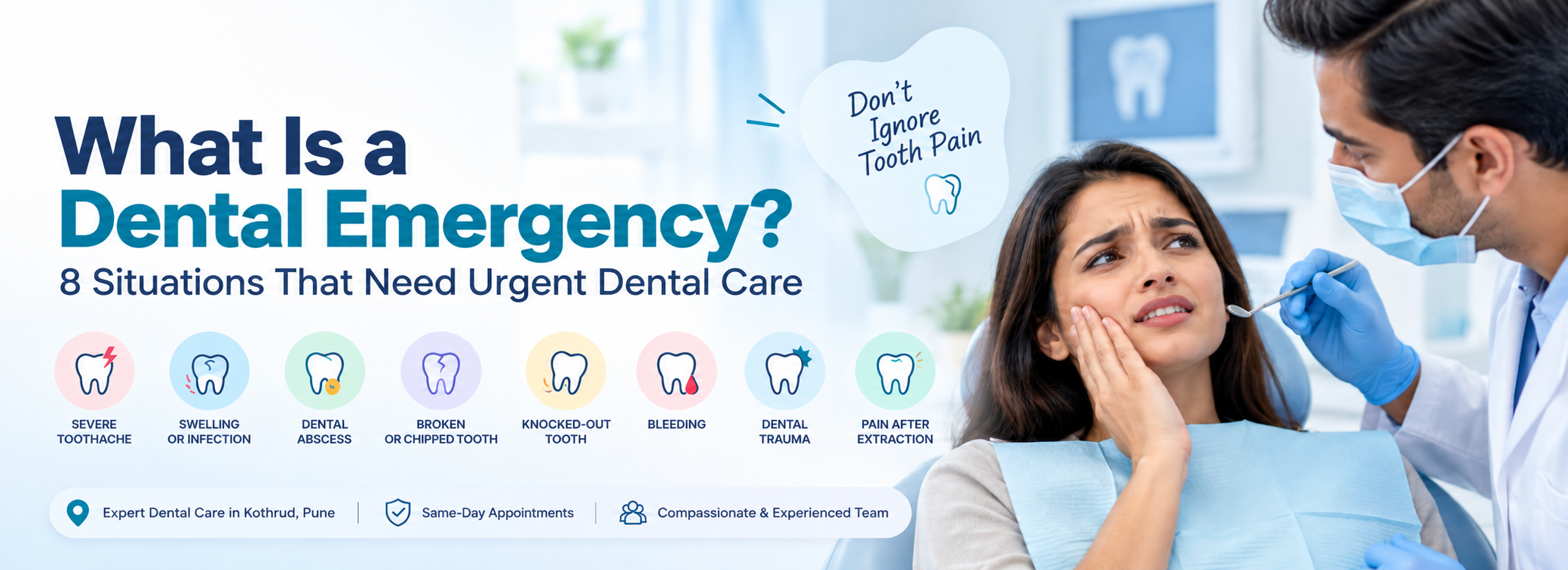
Seek Prompt Dental Care If You Have
- Facial swelling
- Gum swelling
- Fever
- Pus
- Bad-tasting drainage
- Severe persistent pain
- Significant trauma
- Rapidly increasing symptoms
Difficulty breathing or swallowing with facial or neck swelling requires urgent medical assessment.
Can Delaying Treatment Make the Problem Worse?
Yes, depending on the cause.
For example:
A small cavity can become deeper and eventually affect the pulp.
A crack can sometimes extend further.
A damaged filling can allow more food or bacteria into the tooth.
An untreated infection may spread.
Periodontal disease can continue affecting the tissues supporting the teeth.
Early diagnosis can therefore help prevent some dental problems from becoming more complicated.
Tooth Pain Treatment in Kothrud, Pune
Patients searching for a dentist for tooth pain in Pune may benefit from an examination rather than trying to determine the diagnosis from symptoms alone.
At Novacare Dental, Kothrud, Pune, tooth pain assessment may include:
- Clinical dental examination
- Bite evaluation
- Crack assessment
- Gum evaluation
- Pulp testing
- Dental X-rays when appropriate
- Examination of existing crowns and fillings
- Assessment for dental infection
The treatment recommendation depends on what is actually causing the pain.
For example, two patients with apparently similar pain when chewing may ultimately require very different treatments.
One may need a simple restoration adjustment, while another may have a cracked tooth or pulp infection.
How Can You Reduce the Risk of Tooth Pain in the Future?
Not every dental problem can be prevented, but consistent oral care can reduce the risk of several common causes.
Consider:
- Brushing twice daily
- Cleaning between teeth
- Attending regular dental examinations
- Treating cavities early
- Replacing damaged restorations when necessary
- Avoiding chewing extremely hard objects
- Wearing protective equipment during contact sports
- Discussing teeth grinding with your dentist
- Managing gum disease appropriately
Regular dental visits can also identify problems before they become painful.
Frequently Asked Questions
Why does my tooth hurt only when I bite down?
A tooth may hurt only during biting because pressure is aggravating a crack, cavity, damaged filling, inflamed ligament, root inflammation, gum problem, or other dental condition.
Why does my tooth hurt when I bite but not when I touch it?
Biting creates forces deeper within the tooth and surrounding tissues. Some problems may therefore hurt only under chewing pressure rather than light touch.
Can a cracked tooth hurt only when chewing?
Yes. Cracked teeth often produce intermittent pain when chewing rather than continuous toothache.
Can a cavity make my tooth hurt when I bite?
Yes. Deeper tooth decay can irritate the internal tooth tissues and produce pain during chewing.
Why does my tooth hurt when biting after a filling?
Possible causes include temporary sensitivity, a filling that is too high, pulp irritation, a crack, or another underlying problem.
Why does my crown hurt when I bite?
A crown may feel painful if the bite requires adjustment, the underlying tooth is inflamed, the crown has a problem, or another dental condition is present.
Does pain when biting always mean infection?
No. Infection is only one possible explanation.
Decay, cracks, damaged restorations, gum problems, and excessive bite forces can also cause biting pain.
Can teeth grinding cause tooth pain when chewing?
Yes. Grinding and clenching place excessive force on teeth and may make them or their supporting tissues tender.
Does tooth pain when biting always need a root canal?
No.
Root canal treatment is only appropriate when the dental pulp is irreversibly inflamed, infected, or otherwise requires endodontic treatment.
How does a dentist identify the painful tooth?
A dentist may combine clinical examination, bite testing, percussion, pulp tests, gum examination, and dental imaging.
Can a tooth infection cause pain only when biting?
Yes. In some cases, inflammation around an infected tooth root causes tenderness mainly when pressure is applied.
Why does my tooth hurt when I release my bite?
Pain on release can sometimes occur with a cracked tooth because movement within the crack may irritate the pulp or surrounding tissues.
Should I stop chewing on the painful tooth?
Temporarily avoiding hard chewing on the affected tooth may reduce discomfort, but persistent pain should still be evaluated.
Can tooth pain disappear even when there is still a problem?
Yes.
Certain dental conditions can have periods where symptoms decrease or disappear. Lack of pain does not always mean the underlying problem has resolved.
When is tooth pain considered an emergency?
Tooth pain accompanied by significant facial swelling, difficulty swallowing, breathing problems, high fever, or rapidly progressing symptoms requires urgent assessment.
Conclusion
If your tooth hurts when you bite down, do not automatically assume that you need a root canal or extraction.
Pain during chewing can arise from several different dental conditions, including:
- Tooth decay
- Cracked tooth
- Dental infection
- Damaged filling
- Root inflammation
- Gum disease
- Grinding or clenching
- Bite-related problems
- Recent dental treatment
The timing and character of the pain can provide useful clues, but symptoms alone are not enough to make an accurate diagnosis.
A clinical dental examination is the best way to identify the affected tooth, determine the cause, and decide what treatment is appropriate.
At Novacare Dental, Kothrud, Pune, patients experiencing tooth pain while biting or chewing can undergo a detailed evaluation based on their symptoms and clinical findings.
Does Your Tooth Hurt When You Bite Down?
If your tooth hurts when you bite down, keeps returning, or makes chewing uncomfortable, consider scheduling a dental assessment rather than waiting for the symptoms to become more severe.
Book a dental consultation with Novacare Dental, Kothrud, Pune, for evaluation and a treatment plan based on the underlying cause.
This article provides general educational information and should not replace a personal dental examination, diagnosis, or treatment recommendation.