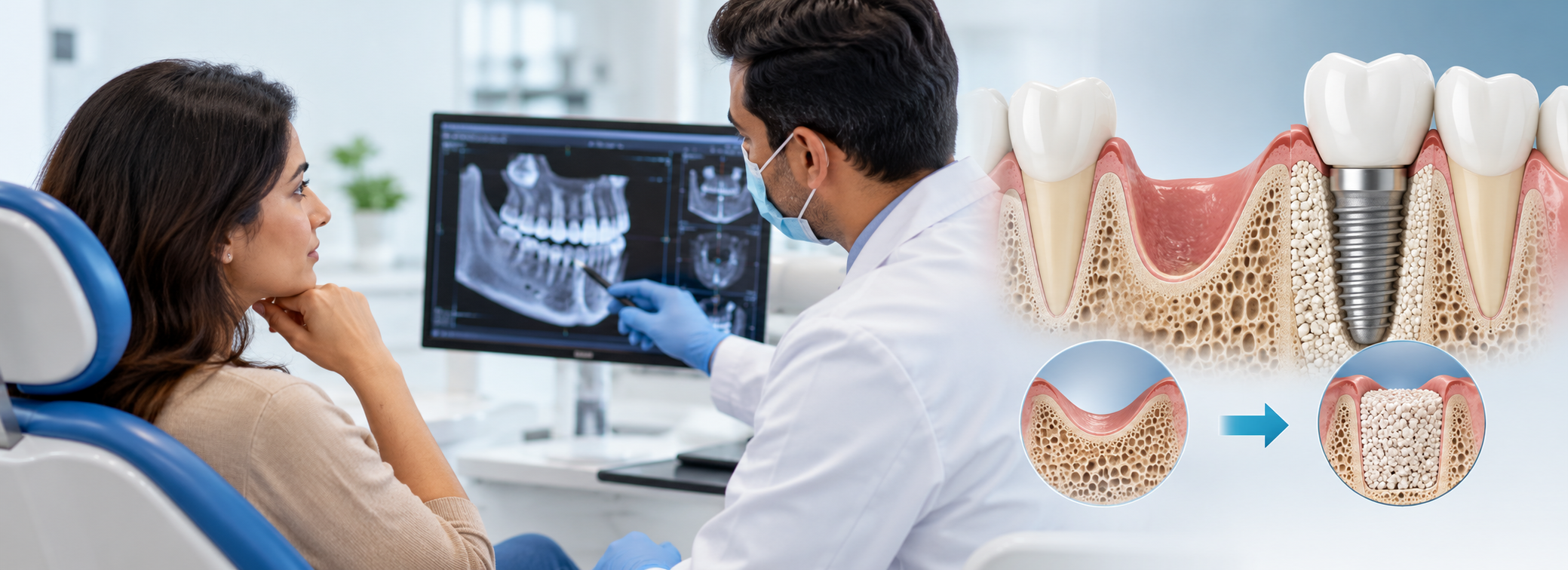
Dental implants are designed to replace missing teeth, restore chewing function, and provide stable support for artificial crowns or bridges. Once treatment and healing are complete, an implant-supported tooth should generally feel comfortable during everyday activities.
However, some patients notice discomfort when eating, biting down, or chewing harder foods.
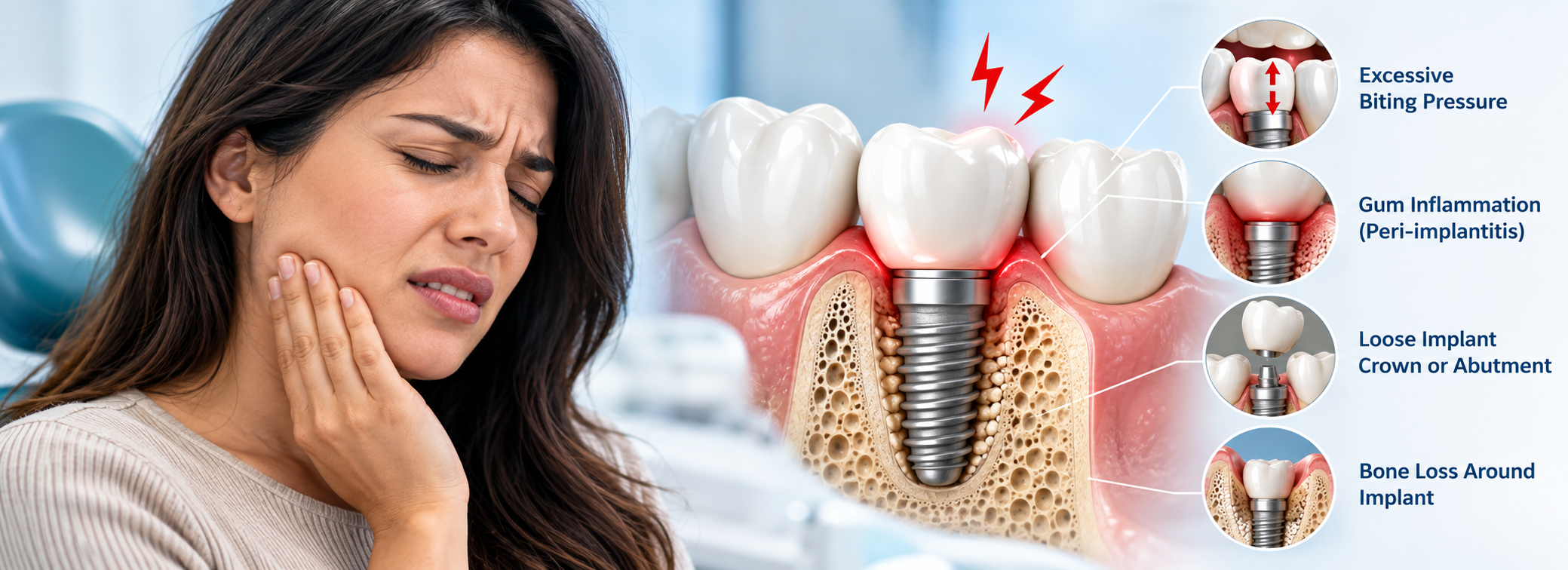
Dental implant pain when chewing can occur because of excessive biting pressure, a loose implant crown, inflammation around the implant, infection, or problems affecting nearby natural teeth.
While mild soreness may be expected shortly after implant surgery, persistent or newly developing pain after healing is not something patients should ignore.
Dental implants do not contain the nerves found inside natural teeth. However, the surrounding gums, jawbone, and soft tissues remain sensitive to irritation and inflammation.
Understanding the possible causes can help patients recognize warning signs and seek appropriate treatment before complications progress.
Quick Answer: Why Does My Dental Implant Hurt When I Chew?
A dental implant may hurt during chewing because of excessive pressure on the crown, loose restorative components, inflamed gums, peri-implantitis, food trapping, or damage to a neighbouring tooth.
Pain does not automatically mean the implant has failed.
A dentist can examine the restoration, assess implant stability, check the bite, and evaluate surrounding tissues to identify the cause.
Can Dental Implants Cause Pain Without a Natural Tooth Nerve?
Yes. Dental implants can cause discomfort even though they do not contain natural tooth pulp.
A dental implant generally consists of three components:
- Implant fixture: The artificial root surgically placed in the jawbone.
- Abutment: The connecting component between the implant and restoration.
- Dental crown: The visible replacement tooth used for chewing.
Unlike natural teeth, implant fixtures do not contain pulp tissue with internal dental nerves.
However, surrounding bone, gum tissue, and other nearby structures contain sensory nerves.
When these tissues become inflamed, infected, or irritated, discomfort may develop.
Similarly, a loose crown or uneven biting contact can create mechanical problems during chewing.
Therefore, pain around an implant should be evaluated rather than automatically attributed to implant failure.
What Causes Dental Implant Pain When Chewing?
Several conditions can produce discomfort around an implant-supported tooth. Some involve the crown or connecting components, while others affect the surrounding tissues.
1. Excessive Biting Pressure on the Implant Crown
An implant crown may sometimes contact the opposing teeth more heavily than intended.
This can happen after fitting a new crown, changes in neighbouring teeth, or alterations in the patient’s bite.
Excessive pressure may contribute to discomfort and mechanical complications.
Possible symptoms:
- Pain when chewing firm or hard foods
- Discomfort after receiving a new implant crown
- A sensation that the implant crown touches first when biting
- Tenderness during repeated chewing
Treatment: The dentist may evaluate biting contacts and adjust the restoration when clinically appropriate.
2. Loose Implant Crown or Abutment
A dental implant restoration contains components that are designed to remain securely connected.
Over time, the crown or its connecting screw may loosen because of mechanical loading, component wear, or other restorative factors.
Patients may notice clicking, movement, or an unusual sensation during chewing.
Other possible signs include food trapping around the crown or discomfort when biting.
Treatment: A dentist can identify which component is loose and determine whether it should be tightened, repaired, or replaced.
Importantly, a loose crown is different from a loose implant fixture. Movement of the implant fixture within the jawbone is more concerning and requires prompt assessment.
The US Food and Drug Administration identifies loose components and implant-body instability among potential complications that require professional evaluation.
FDA
3. Peri-Implant Mucositis
Peri-implant mucositis is inflammation of the soft tissues surrounding a dental implant without progressive supporting bone loss beyond normal initial bone remodeling.
It is commonly associated with bacterial plaque accumulation around the implant.
The condition may develop when cleaning around the restoration becomes difficult or plaque remains along the gumline.
Possible symptoms include:
- Redness around the implant
- Bleeding during brushing or cleaning
- Swollen or tender gums
- Localized discomfort
Early inflammation is often reversible with appropriate professional care and improved plaque control.
The American Academy of Periodontology explains the difference between peri-implant mucositis and more advanced inflammatory disease.
American Academy of Periodontology
4. Peri-Implantitis and Supporting Bone Loss
Peri-implantitis is an inflammatory condition affecting the tissues around a dental implant and involving progressive loss of supporting bone.
It can develop when bacterial plaque and other contributing factors cause persistent inflammation around the implant.
Unlike mucositis, the condition affects both the soft tissues and supporting bone.
Possible warning signs include:
- Bleeding around the implant
- Swelling or redness
- Pus or an unpleasant taste
- Gum recession
- Increasing gum pocket depths
- Discomfort while chewing
- Changes in supporting bone levels
However, peri-implantitis may develop without obvious pain.
Diagnosis requires more than symptoms alone. Dentists assess clinical inflammation, probing findings, and changes in bone levels.
The international World Workshop consensus report describes peri-implantitis as an inflammatory condition associated with progressive supporting bone loss.
PubMed
Treatment: Depending on severity, management may involve professional cleaning, controlling contributing factors, and specialist surgical care when indicated.
5. Food Trapping Around the Implant Crown
Food trapping is another possible cause of discomfort during meals.
The contact between an implant crown and an adjacent natural tooth can change over time.
When a gap develops, food particles may become trapped and irritate the surrounding gums.
Patients may notice pressure, tenderness, or repeated food accumulation in the same area.
Treatment: The dentist may examine the crown’s shape and contact points and assess whether restorative adjustments are needed.
6. Teeth Grinding or Clenching
Bruxism involves repeated grinding or clenching of the teeth, often during sleep.
These forces can place additional mechanical stress on implant-supported restorations.
Over time, excessive loading may contribute to crown fractures, screw loosening, or other complications.
Patients may also experience jaw muscle discomfort or notice that their teeth feel sore after waking.
Treatment: A dentist may recommend a custom night guard, evaluate the bite, or suggest additional treatment depending on the patient’s condition.
7. Dental Implant Instability or Loss of Integration
Osseointegration is the biological process through which surrounding bone establishes stable contact with an implant surface.
If an implant does not integrate adequately during healing, or if it later loses supporting bone, stability may be affected.
A mobile implant fixture is a significant warning sign.
Other symptoms may include discomfort during chewing, swelling, or difficulty using the affected restoration.
However, not every failing implant causes noticeable pain.
Treatment: The dentist must determine whether the fixture is unstable and whether treatment or removal is necessary.
8. Pain From a Neighbouring Natural Tooth
Sometimes an implant appears to be the source of discomfort when the actual problem is a nearby tooth.
Possible causes include a cavity, cracked tooth, gum infection, or inflammation of dental pulp in an adjacent natural tooth.
For example, pain when biting may originate from a cracked neighbouring molar rather than the implant crown.
A complete examination helps identify the actual cause and prevents unnecessary treatment of a healthy implant.
Dental Implant Pain: Symptoms and Possible Causes
The location, timing, and type of discomfort may provide clues about the underlying problem.
| Symptom | Possible Explanation |
|---|---|
| Pain after fitting a new crown | Excessive biting contact |
| Clicking or crown movement | Loose crown or abutment |
| Bleeding and tender gums | Peri-implant mucositis |
| Swelling with supporting bone loss | Possible peri-implantitis |
| Pain with food trapping | Gum irritation or contact problem |
| Crown fracture or repeated screw loosening | Mechanical overload or restoration issue |
| Movement of the implant fixture | Possible loss of integration |
| Sensitivity to cold near the implant | Possible neighbouring natural tooth problem |
These symptoms cannot confirm a diagnosis on their own.
Professional examination is necessary because different implant and dental conditions can produce similar discomfort.
Is Dental Implant Pain Normal After Surgery?
Some discomfort is expected during the initial healing period, but the timing and progression of symptoms are important.
Pain During the First Few Days
Mild to moderate soreness, swelling, and tenderness may occur after implant placement.
Symptoms should generally improve as healing progresses.
Recovery varies according to surgical complexity, whether grafting was performed, and the patient’s individual healing response.
Pain After Several Weeks or Months
Persistent or worsening pain after the initial recovery period should be investigated.
Possible causes include healing complications, inflammation, infection, or excessive loading on the restoration.
A dentist may recommend clinical examination and imaging to determine whether healing is progressing appropriately.
Dental Implant Pain Years Later
An established implant that has functioned comfortably for years should not suddenly become painful during chewing.
New discomfort may indicate a loose restoration, gum inflammation, peri-implant disease, or another dental problem.
A previously comfortable implant becoming painful is a reason to arrange a dental evaluation.
How Does a Dentist Diagnose Pain Around a Dental Implant?
An accurate diagnosis helps determine whether the problem involves the restoration, the implant fixture, surrounding tissues, or another tooth.
Clinical Examination
The dentist examines the implant crown, surrounding gums, and nearby natural teeth.
Visible swelling, redness, restoration damage, and other changes may provide useful information.
Bite Assessment
Biting contacts are checked to identify whether the implant crown receives excessive pressure.
The dentist may evaluate the restoration during normal biting and chewing movements.
Implant Stability Check
The clinician assesses whether movement involves the crown, abutment, or implant fixture.
This distinction is important because a loose restoration and an unstable implant may require very different treatments.
Peri-Implant Tissue Examination
Gentle probing helps evaluate gum pocket depths, bleeding, and signs of inflammation.
Previous examination records may be compared to identify changes over time.
Dental X-Rays and CBCT
Dental radiographs can help assess supporting bone levels, implant positioning, and certain mechanical complications.
CBCT imaging may be considered when additional three-dimensional information is necessary.
A published periodontal consensus report explains that peri-implantitis diagnosis involves inflammatory signs together with changes in supporting bone and probing measurements.
PubMed
How Is Dental Implant Pain When Chewing Treated?
Treatment depends on the underlying cause and the condition of the implant and surrounding tissues.
Some problems can be managed by repairing the restoration, while others require periodontal or specialist implant treatment.
| Identified Problem | Possible Treatment |
|---|---|
| Excessive crown contact | Bite assessment and adjustment |
| Loose crown or abutment | Securing, repairing, or replacing components |
| Peri-implant mucositis | Professional cleaning and improved plaque control |
| Peri-implantitis | Non-surgical or surgical peri-implant treatment |
| Food trapping | Crown contact or contour correction |
| Bruxism | Custom night guard and restorative assessment |
| Implant fixture instability | Specialist evaluation and possible removal |
| Neighbouring tooth problem | Treatment of the affected natural tooth |
Can a Painful Dental Implant Be Saved?
In many cases, yes.
Pain does not automatically mean the implant needs to be removed.
A loose crown, incorrect bite, or early gum inflammation may be treatable while preserving the existing implant.
However, severe supporting bone loss, persistent infection, or fixture instability can make treatment more complicated.
The possibility of preserving an implant depends on clinical findings, remaining bone support, and response to treatment.
What Should You Do If Your Dental Implant Hurts When You Chew?
If your implant becomes uncomfortable during meals, arrange a dental appointment rather than waiting for symptoms to worsen.
Until the appointment:
- Avoid chewing hard or sticky foods on the affected side.
- Choose softer foods that require less chewing pressure.
- Continue gentle cleaning around the implant.
- Avoid repeatedly biting down to test the pain.
- Use appropriate over-the-counter pain relief only according to product instructions and your medical circumstances.
- Avoid attempting to tighten a loose crown yourself.
Do not use household adhesives to secure a crown or take leftover antibiotics without professional advice.
When Is Implant Pain an Emergency?
Seek urgent dental care if you experience:
- Movement of the implant fixture
- Increasing gum or facial swelling
- Pus around the implant
- Fever associated with dental swelling
- Severe or rapidly worsening pain
Seek emergency medical care immediately if swelling causes difficulty breathing or swallowing, spreads rapidly into the face or neck, or is associated with severe illness.
How Can You Prevent Dental Implant Pain and Complications?
Proper oral hygiene, professional follow-ups, and timely treatment of new problems are important for maintaining implant health.
Maintain Good Daily Oral Hygiene
Brush twice daily and clean around implant restorations using methods recommended by your dentist.
Specialized interdental brushes or flossing aids may be useful depending on the restoration.
Attend Regular Dental Checkups
Professional examinations allow dentists to assess the implant crown, surrounding gums, and supporting bone.
The frequency of follow-up visits should reflect your individual risk factors and oral health needs.
Address Gum Inflammation Early
Bleeding around an implant should not be ignored.
Early evaluation may help identify inflammation before additional complications develop.
Manage Teeth Grinding
If you grind or clench your teeth, discuss protective options with your dentist.
A custom night guard may be recommended where appropriate.
Avoid Smoking
Smoking can interfere with healing and is associated with an increased risk of complications around dental implants.
Maintain Overall Health
Medical conditions such as diabetes can influence healing and implant maintenance.
Discuss relevant medical conditions and medications with your dental professional.
Repair Loose or Damaged Crowns
A crown that feels loose, clicks, or changes position should be examined promptly.
Early restorative care may help prevent further mechanical damage.
Frequently Asked Questions About Dental Implant Pain
1. Why does my dental implant hurt when I bite down?
Possible causes include excessive biting pressure, a loose crown, inflamed gums, peri-implantitis, or a problem affecting a nearby natural tooth.
2. Is it normal for a dental implant to hurt while chewing?
Mild discomfort may occur during early healing. However, persistent or new pain after the implant has healed should be evaluated by a dentist.
3. Can a dental implant start hurting years later?
Yes. Crown loosening, gum inflammation, mechanical damage, infection, or nearby dental problems can develop years after implant placement.
4. Does a painful dental implant mean implant failure?
Not necessarily. Some causes, including loose restorative components or excessive crown pressure, may be treated without removing the implant.
5. What are the signs of peri-implantitis?
Possible signs include bleeding, swelling, gum recession, pus, deepening pockets, and progressive supporting bone loss. Pain may or may not be present.
6. Can a loose implant crown cause chewing discomfort?
Yes. Movement of a crown or abutment may create discomfort during chewing. A dentist should identify which component is loose.
7. Can teeth grinding damage dental implants?
Excessive grinding forces may contribute to mechanical complications involving crowns, screws, and other restoration components.
8. Why does my implant hurt when eating hard food?
Hard foods place greater pressure on the restoration. Pain may indicate a bite problem, loose component, inflamed tissues, or another dental condition.
9. Can an infected dental implant be saved?
Sometimes. Early inflammation may respond to appropriate treatment. Advanced disease may require additional procedures, and implant preservation depends on the clinical findings.
10. When should I visit a dentist for dental implant pain?
Arrange an appointment promptly for recurring, persistent, or worsening pain. Seek urgent care if the implant moves or if significant swelling, pus, fever, or severe pain develops.
Conclusion: Don’t Ignore Dental Implant Pain When Chewing
Discomfort around an implant-supported tooth can develop for several reasons, including excessive biting forces, loose restorative components, gum inflammation, peri-implantitis, or conditions affecting neighbouring teeth.
Although mild soreness is expected during initial surgical recovery, an established dental implant should generally remain comfortable during everyday chewing.
Pain does not automatically mean the implant has failed.
The most important step is identifying the actual cause through professional examination and appropriate diagnostic tests.
Early evaluation can help determine whether restorative adjustments, periodontal treatment, or specialist care are necessary.
Experiencing Pain While Chewing on a Dental Implant?
If your dental implant feels painful, loose, or uncomfortable during meals, consider arranging a professional dental examination.
At Novacare Dental, Pune, patients can seek a consultation to evaluate dental discomfort and discuss appropriate treatment options.
A dental assessment may include examining the crown, checking biting contacts, evaluating surrounding gum tissues, and reviewing dental imaging when necessary.
Book a Dental Consultation at Novacare Dental to understand the possible causes of your symptoms and the next steps for care.