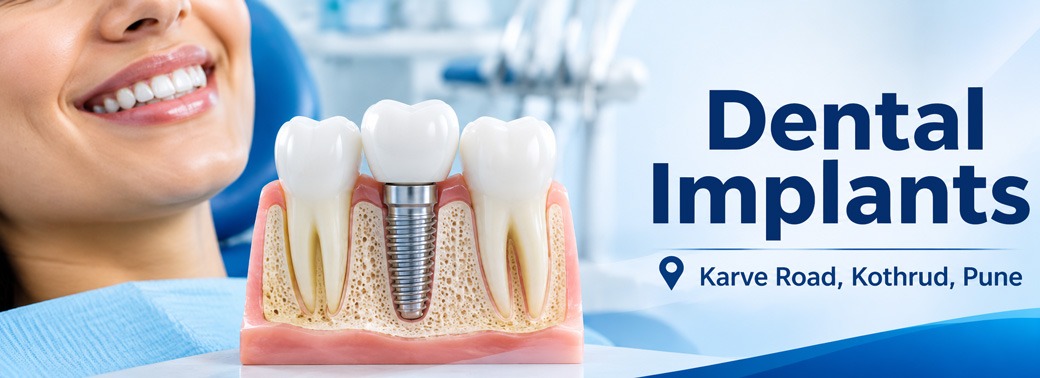
Losing a tooth can affect more than your smile. It may make chewing uncomfortable, change the way you speak and, over time, contribute to changes in the jawbone. Dental implants offer a way to replace missing teeth with restorations that are supported by the jawbone rather than by neighbouring natural teeth.
If you are considering dental implants in Karve Road Kothrud Pune, the first step is understanding which treatment approach suits your condition. A single missing tooth, several missing teeth and complete tooth loss require different types of planning. Options such as immediate implants, single sitting implants, zygomatic implants and full mouth implants are designed for different clinical situations.
At Novacare Dental in Kothrud, Pune, patients can consult about these implant treatment options and have their oral health, bone condition and replacement requirements assessed before a treatment plan is recommended.
What Are Dental Implants?
A dental implant is a small, screw-shaped component, usually made from titanium, that is surgically placed in the jawbone to replace the root of a missing tooth. Once it has integrated with the surrounding bone, it can support a dental crown, bridge or denture.
A typical dental implant restoration has three components:
- Implant: The part placed inside the jawbone that acts as an artificial tooth root.
- Abutment: The connector attached to the implant.
- Crown or prosthesis: The visible replacement tooth or set of teeth attached to the implant.
Unlike a conventional dental bridge, a single-tooth implant generally does not require the neighbouring teeth to be reshaped for support. Implants can also be used to stabilise replacement teeth when several or all teeth are missing.
Types of Dental Implants Available at Novacare Dental, Pune
Dental implant treatment is not the same for every patient. The number of missing teeth, available jawbone, gum health and overall treatment goals all influence the approach.
Novacare Dental offers consultation and treatment planning for the following implant options.
1. Dental Implants
Conventional dental implants are commonly considered when one or more teeth are missing and the surrounding jawbone can support implant placement. For a single missing tooth, an implant can support an individual crown. When multiple teeth are missing, implants may support a dental bridge or another type of prosthesis.
Who may be suitable?
Patients who have lost one or more teeth due to decay, injury, gum disease or other dental conditions may be considered for conventional dental implants. The dentist first checks bone availability, gum health and the condition of the remaining teeth. The number of implants required depends on how many teeth need replacement and how the final restoration will be designed.
2. Single Sitting Dental Implants
Single sitting dental implants generally refer to an approach in which implant placement and a temporary tooth replacement may be completed during the same treatment visit or within a short period. However, it is important to understand what single sitting means in your treatment plan. Placing the implant and providing a temporary tooth on the same day does not necessarily mean that the final permanent crown is ready that day. The implant still needs time to integrate with the jawbone. During this healing period, the dentist may recommend a temporary restoration and restrictions on biting or chewing with the treated area.
Who may be suitable?
This approach may be considered when the patient has suitable bone quality, healthy surrounding tissues and enough initial implant stability. The bite and location of the missing tooth also matter. A detailed assessment is necessary before deciding whether a single-sitting approach is appropriate.
3. Zygomatic Implants
Zygomatic implants are a specialised option for selected patients with severe bone loss in the upper jaw. Unlike conventional dental implants, which are anchored in the jawbone, zygomatic implants gain support from the zygomatic bone, commonly known as the cheekbone. They may be considered when there is insufficient bone in the upper jaw for conventional implant placement and when other treatment approaches, such as bone grafting, may not be suitable or preferred.
Who may be suitable?
Zygomatic implants are generally considered for complex cases involving significant upper-jaw bone loss, including some patients who have been told that they do not have enough bone for conventional implants. This is an advanced surgical procedure. Careful three-dimensional imaging, anatomical assessment and specialist planning are important before treatment.
4. Immediate Dental Implants
Immediate implant placement means placing a dental implant in the tooth socket during the same appointment as the extraction of the tooth. For example, if a tooth is severely damaged and cannot be restored, the dentist may assess whether an implant can be placed immediately after removing it. This approach can reduce the number of separate surgical stages in suitable cases. However, it is not appropriate for every extraction.
Who may be suitable?
Immediate implant placement may be considered when:
- The tooth needs to be removed and the surrounding bone is suitable.
- There is sufficient bone to achieve initial implant stability.
- The surrounding gum and tissues are suitable for the procedure.
- Any infection or inflammation can be appropriately managed.
A temporary tooth may sometimes be provided, but immediate implant placement does not automatically mean immediate loading. Whether a temporary or permanent tooth can be attached straight away depends on the stability of the implant and the patient’s clinical condition.
5. Full Mouth Dental Implants
Full mouth dental implants are designed for patients who have lost most or all of their teeth, or whose remaining teeth cannot be maintained. Instead of replacing every missing tooth with an individual implant, a carefully planned number of implants can support a full-arch fixed bridge or an implant-supported removable prosthesis. The treatment plan considers the condition of both jaws, the available bone, the bite, facial support, appearance and the type of final teeth required.
Who may be suitable?
Full mouth implant treatment may be considered for patients with:
- Complete tooth loss in the upper jaw, lower jaw or both.
- Multiple damaged or failing teeth that may need removal.
- Dentures that feel unstable or cause difficulty while eating.
- A need for a more stable, implant-supported replacement.
The number and position of implants depend on the patient’s anatomy and the design of the final restoration. Not every full-mouth case follows the same implant technique or treatment timeline.
Dental Implant Procedure: What Happens During Treatment?
Dental implant treatment involves more than placing an implant in the jaw. Planning the final replacement tooth is just as important as the surgical procedure. Although the exact process varies, treatment generally involves the following stages.
1. Initial Consultation and Dental Examination
The dentist examines your teeth, gums, bite and the area where the tooth is missing. Your medical history, medications, smoking habits and any existing dental conditions are also relevant. If gum disease, decay or infection is present, it may need to be addressed before implant treatment.
2. X-rays and 3D Imaging
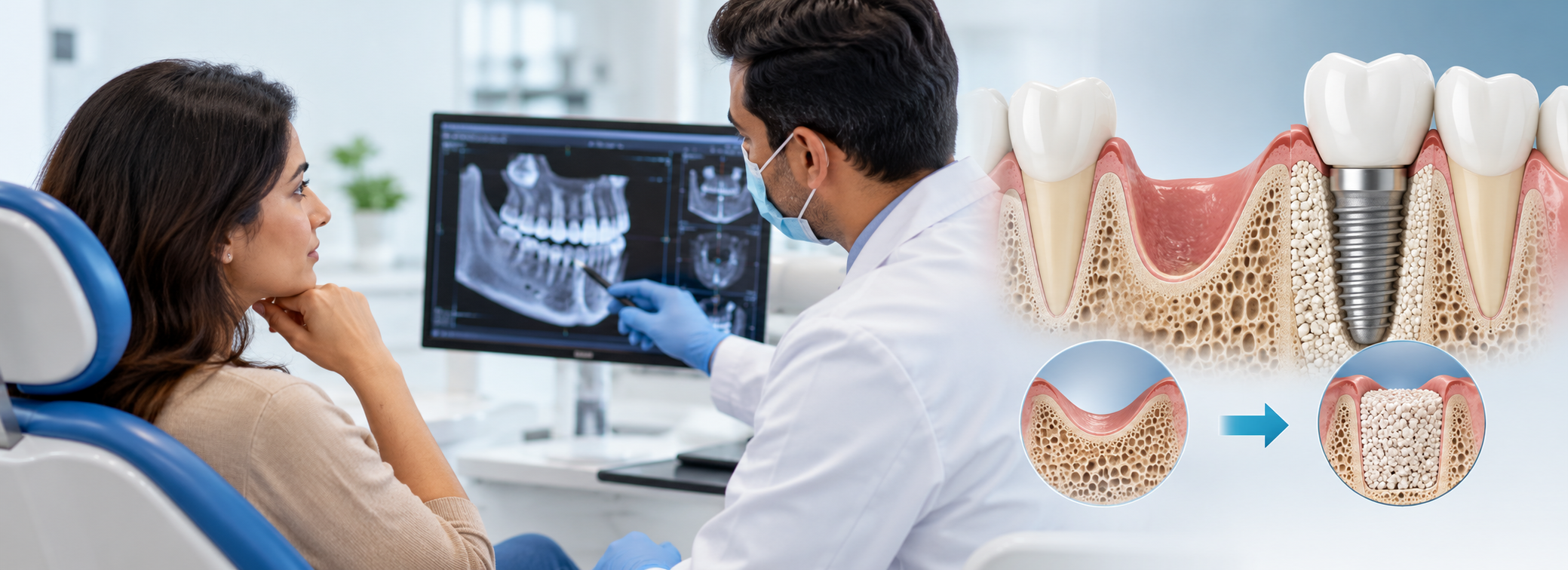
Dental X-rays and, where indicated, a CBCT scan help assess the amount and shape of available bone. They also help the dentist identify important anatomical structures, such as nerves and the sinus cavities. This information is used to determine implant position, size and whether additional procedures may be needed.
3. Implant Placement
The procedure is usually performed under local anaesthesia. The dentist prepares the implant site and places the implant into the jawbone. Depending on the case, the gum may be closed over the implant or a healing component may be left visible above the gum.
4. Healing and Osseointegration
After placement, the implant needs time to integrate with the surrounding bone. This process is called osseointegration. Healing commonly takes a few months, although the timeline varies with the patient’s bone condition, treatment complexity and individual healing response. A temporary replacement may be provided where appropriate. The dentist will advise whether the implant can be used for chewing during this period.
5. Final Crown, Bridge or Prosthesis
Once the implant has healed sufficiently, the final restoration is prepared and attached. The dentist checks the fit, appearance and bite to ensure that the replacement teeth function properly. Follow-up appointments are important to monitor the restoration and the health of the surrounding gums.
Benefits of Dental Implants
Dental implants can offer practical benefits for patients who have lost one or more teeth.
Restores chewing function: Implant-supported teeth can provide stable support while eating, subject to the restoration and your dentist’s instructions.
Replaces missing teeth: Implants can support a single crown, a bridge or a full-arch restoration, depending on the treatment plan.
Does not usually require reshaping adjacent teeth: A single-tooth implant can replace a missing tooth without using neighbouring teeth as bridge supports.
Supports jawbone function: An implant transfers chewing forces to the surrounding bone. This can help reduce the local bone changes associated with an untreated missing tooth, although it does not prevent all bone loss.
Provides a fixed replacement option: Depending on the restoration selected, implants can support teeth that are fixed in place rather than removable.
The benefits depend on appropriate case selection, treatment planning, maintenance and healing. Dental implants are not a guarantee against future dental problems.
Who Is a Suitable Candidate for Dental Implants?
Many adults with missing teeth can be assessed for dental implants, but suitability depends on more than age or the number of missing teeth.
The dentist will consider:
- Jawbone condition: There must be adequate bone for the planned implant, or a suitable bone augmentation approach must be considered.
- Gum health: Active gum disease needs to be assessed and managed.
- General health: Certain medical conditions can affect healing and surgical risk.
- Smoking and tobacco use: Smoking can interfere with healing and increase the risk of implant complications.
- Medications: Some medicines and medical treatments may influence bone healing or bleeding risk.
- Oral hygiene: Patients need to maintain daily cleaning and attend regular dental reviews.
Having diabetes, osteoporosis or another medical condition does not automatically rule out implant treatment. However, the dentist may need additional medical information or coordination with the patient’s treating doctor before proceeding.
Dental Implant Cost in Pune: What Determines the Price?
One of the first questions patients ask is, “How much do dental implants cost in Pune?”
There is no single price that applies to every patient. The total cost depends on the type of implant treatment, the number of implants, the condition of the jawbone and the final replacement teeth. Some of the main factors that influence dental implant cost include:
Type of Implant Treatment
A single-tooth implant, immediate implant, single-sitting approach, zygomatic implant and full-mouth rehabilitation involve different levels of planning and surgical complexity. Advanced procedures may require additional specialist assessment.
Number of Implants Required
Replacing one missing tooth is different from restoring several teeth or an entire dental arch. The number, position and distribution of implants affect the overall treatment plan.
Bone Grafting or Additional Procedures
Some patients may need bone grafting, sinus-related procedures or other preparatory treatment before conventional implant placement. These procedures can add to the total cost and treatment time.
Type of Crown or Final Restoration
The material, design and fabrication of the final crown, bridge or full-arch prosthesis also influence the overall cost.
Diagnostic Tests and Follow-up Care
Imaging, clinical investigations, temporary restorations and follow-up appointments may form part of the treatment estimate.
What should you ask before comparing dental implant prices?
Ask whether the quoted amount includes the implant, abutment, final crown or bridge, scans, temporary teeth, any required grafting and follow-up visits. A quote that covers only implant placement may not represent the complete treatment cost.
For an accurate estimate, consult a dentist who can examine your condition and explain the complete treatment plan. At Novacare Dental, patients can discuss their implant requirements during a consultation at the Kothrud clinic.
Recovery and Aftercare Following Dental Implant Surgery
Some discomfort, swelling, minor bleeding or bruising can occur after implant surgery. The extent of recovery depends on whether the procedure involved a single implant, multiple implants, grafting or more complex surgery.
Your dentist will provide instructions based on the procedure. General aftercare may include:
- Eat soft foods during the initial healing period, as advised.
- Avoid chewing directly on the surgical site until your dentist permits it.
- Keep the rest of your mouth clean and follow the recommended cleaning instructions.
- Avoid smoking and tobacco, particularly during healing.
- Take prescribed medication only as directed.
- Attend scheduled follow-up appointments.
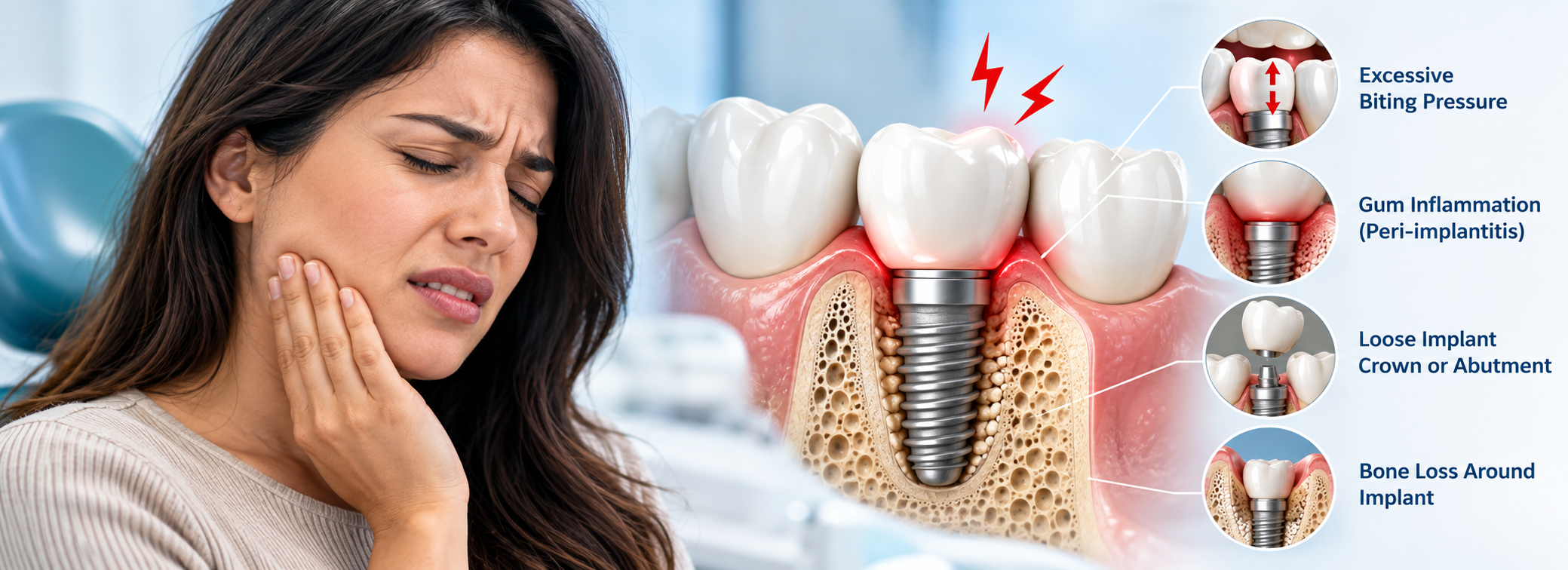
Contact your dentist if pain or swelling worsens rather than improves, or if you notice persistent bleeding, fever, discharge or unusual symptoms. If an implant or its attached restoration feels loose, arrange a dental assessment promptly.
How Do You Maintain Dental Implants Long Term?
Dental implants need regular care. Although the artificial tooth cannot develop decay in the same way as a natural tooth, the gum and bone around the implant can still develop inflammation and infection.
Brush twice daily, clean between the teeth and around the implant using suitable floss or interdental cleaning aids, and attend regular dental check-ups. Your dentist may also recommend professional cleaning at intervals based on your oral health.
Good maintenance helps protect the tissues around the implant and allows problems to be identified early.
Why Consult Novacare Dental for Dental Implants in Karve Road Kothrud Pune?
Choosing an implant treatment involves understanding the condition of your teeth and jawbone, the available treatment options and the long-term maintenance required. Novacare Dental offers consultations for conventional dental implants, single sitting implants, immediate implants, zygomatic implants and full mouth implant treatment.
The clinic is located in Kothrud, Pune, on Karve Road, opposite Kothrud Bus Stand Road and near Venus Traders. Patients can discuss their dental concerns, undergo an assessment and understand which implant options may be appropriate for their condition.
Clinic address: Shop No. A/04, Damodar Villa Apts, Karve Road, Opp. Kothrud Bus Stand Road, Near Venus Traders, Kothrud, Pune, Maharashtra 411038.
Call: +91 86240 36966
To discuss your treatment requirements, visit the Novacare Dental dental implants page or contact the clinic.
Frequently Asked Questions About Dental Implants
1. How much do dental implants cost in Pune?
The cost depends on the number of implants, type of treatment, bone condition, need for additional procedures and the final crown or prosthesis. A clinical examination is required for an accurate estimate.
2. How long does dental implant treatment take?
Treatment may take several months because the implant needs time to integrate with the jawbone before the final restoration is fitted. Some suitable cases allow immediate placement or a temporary tooth, but this does not eliminate the healing period.
3. Are dental implants painful?
Implant placement is generally performed under local anaesthesia, so pain during the procedure is controlled. Some soreness, swelling or bruising may occur afterwards. Your dentist will explain how to manage discomfort during recovery.
4. What is the difference between immediate implants and single sitting implants?
Immediate implants describe placing an implant in the tooth socket during the same appointment as extraction. Single sitting implants generally refer to completing implant placement and a temporary replacement within one visit or a short treatment period. The terms can overlap, but they do not always describe the same procedure.
5. Can dental implants be placed on the same day as tooth extraction?
In selected cases, an implant can be placed immediately after extraction. The dentist must first assess the extraction site, surrounding bone, gum condition and ability to achieve initial implant stability.
6. What are zygomatic implants used for?
Zygomatic implants are specialised implants anchored in the cheekbone. They may be considered for patients with severe bone loss in the upper jaw when conventional implant placement is difficult. They require careful specialist assessment and planning.
7. Can I get full mouth dental implants if I have lost all my teeth?
Yes, full-mouth implant treatment may be an option for people who have lost all or most of their teeth. The number and position of implants, and whether the final teeth will be fixed or removable, depend on the patient’s bone condition and treatment requirements.
8. How long do dental implants last?
The lifespan of an implant varies. It depends on factors such as oral hygiene, gum health, smoking, general health, bite forces and regular professional maintenance. The crown or prosthesis may need repair or replacement over time even if the implant itself remains stable.
9. Can smokers get dental implants?
Smoking does not automatically rule out implant treatment, but it can interfere with healing and increase the risk of complications. Discuss your smoking habits honestly with the dentist before treatment.
10. Where can I consult for dental implants in Kothrud, Pune?
You can consult Novacare Dental at Damodar Villa Apts, Karve Road, opposite Kothrud Bus Stand Road, near Venus Traders, Kothrud, Pune. Call +91 86240 36966 to enquire about an implant consultation.
Planning Dental Implant Treatment in Pune?
Whether you need to replace one missing tooth or are exploring full-mouth dental rehabilitation, the right starting point is a proper clinical assessment. The dentist can evaluate your bone and gum health, explain suitable implant options and provide a treatment plan based on your requirements.
Book a dental implant consultation at Novacare Dental, Kothrud, Pune.