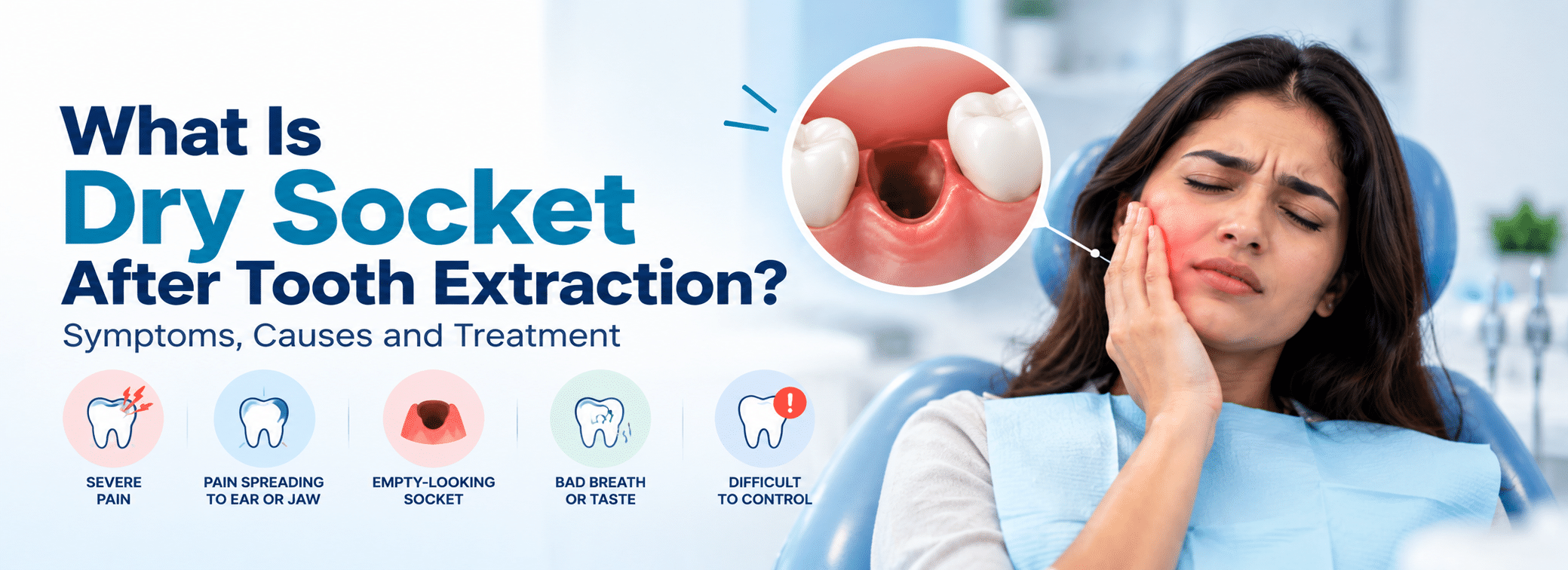
Dry socket after tooth extraction, medically known as alveolar osteitis, is a painful complication that can develop when the protective blood clot at an extraction site breaks down or is lost before the socket has healed sufficiently. It can expose sensitive bone and nerve endings, causing significant pain that may spread toward the ear, temple, or jaw.
After a tooth is removed, a blood clot normally forms inside the empty socket. This clot protects the underlying tissues and supports the early stages of healing.
When the clot is lost or breaks down too soon, healing can become more painful. Dry socket is particularly associated with lower wisdom tooth extractions, although it can occur after other extractions.
Recognizing the symptoms early can help patients seek appropriate dental care and obtain relief.
Quick Answer: What is dry socket after tooth extraction?
Dry socket is a painful condition that occurs when the blood clot protecting a tooth extraction site is lost or breaks down prematurely. Symptoms commonly begin one to three days after extraction and include increasing pain, an empty-looking socket, and pain that may radiate toward the ear or jaw. A dentist can clean the area, provide a soothing medicated dressing when appropriate, and recommend pain management while the socket heals.
What Happens During Normal Healing After Tooth Extraction?
After a tooth is removed, the body begins repairing the empty socket.
A blood clot forms at the extraction site and serves three important purposes:
- Protects the underlying bone and sensitive nerve endings.
- Provides a foundation for new tissue formation.
- Supports the natural healing process.
Over time, healing tissue gradually replaces the clot, and the socket begins to close.
When this process is disrupted, a dry socket may develop.
What Are the Symptoms of Dry Socket After Tooth Extraction?
1. Severe Pain a Few Days After Extraction
The most common symptom is significant pain that develops or worsens approximately one to three days after tooth removal.
Unlike normal post-extraction discomfort, which generally improves gradually, dry socket pain may become increasingly intense.
2. Pain Spreading Toward the Ear or Jaw
Dry socket pain may radiate from the extraction site toward the ear, temple, eye, or neck on the same side of the face.
3. Empty-Looking Tooth Socket
The socket may appear to have lost its dark blood clot. In some cases, exposed bone may be visible.
However, patients should not attempt to probe the socket or diagnose dry socket based on appearance alone.
4. Bad Breath or Unpleasant Taste
Food debris and inflammation around the extraction site may contribute to an unpleasant taste or odour.
5. Pain That Is Difficult to Control
Dry socket pain may be severe enough to interfere with eating, sleeping, or daily activities.
These symptoms are consistent with clinical descriptions from Mayo Clinic and Cleveland Clinic.

Mayo Clinic
+1
What Causes Dry Socket After Tooth Extraction?
The exact biological mechanism is not fully understood. Dry socket is associated with premature breakdown or loss of the blood clot, and several factors can increase the risk.
1. Smoking or Tobacco Use
Smoking is an important risk factor for dry socket.
Tobacco exposure can interfere with healing, while suction during smoking may disturb the protective blood clot.
2. Vigorous Rinsing or Spitting
Forceful rinsing and spitting soon after extraction may disturb the newly formed clot.
3. Drinking Through a Straw
Suction from using a straw may dislodge the blood clot during early healing.
4. Difficult or Surgical Tooth Extraction
Complex extractions, particularly impacted lower wisdom teeth, may involve greater tissue trauma and a higher risk of dry socket.
5. Existing Oral Infection or Poor Oral Hygiene
Bacterial contamination and inflammation may contribute to complications during healing.
6. Hormonal Factors
Some studies associate estrogen-containing oral contraceptives with increased dry socket risk.
Patients should tell their dentist about their medications, but should not stop prescribed contraception without medical advice.
These are risk factors, not guarantees that dry socket will occur.

Mayo Clinic
+1
Dry Socket vs Normal Tooth Extraction Healing
| Feature | Normal healing | Possible dry socket |
| Pain | Generally improves over time | Becomes severe or worsens after initial healing |
| Blood clot | Usually remains during early healing | May be absent or broken down |
| Socket appearance | Gradually fills with healing tissue | May appear empty or show exposed bone |
| Pain location | Mainly around extraction site | May spread toward ear, temple, or jaw |
| Bad taste or breath | May occur temporarily | Can accompany severe pain |
| Treatment | Routine aftercare | Dental examination and symptom management |
An empty-looking socket alone does not confirm dry socket. The diagnosis depends on symptoms and a dental examination.
How Is Dry Socket Diagnosed?
A dentist usually evaluates the extraction site and asks about the timing and severity of pain.
The examination may include checking whether the blood clot is present, whether bone is exposed, and whether food debris has accumulated.
If necessary, a dental X-ray may be taken to rule out retained tooth fragments or other complications.
How Is Dry Socket Treated by a Dentist?
1. Gentle Cleaning of the Extraction Site
A dentist may carefully irrigate the socket to remove food particles and debris contributing to discomfort.
2. Medicated Dressing
A soothing medicated dressing may be placed inside the socket to reduce pain.
The dentist determines whether a dressing is necessary and whether it needs to be changed.
3. Pain Management
Appropriate pain-relieving medication may be recommended based on the patient’s medical history and symptoms.
4. Follow-Up Care
The dentist may arrange follow-up visits to assess healing and manage persistent discomfort.
Antibiotics are not routinely required for uncomplicated dry socket. They may be appropriate if a separate infection is diagnosed.
Treatment primarily focuses on pain relief and supporting natural healing.

Mayo Clinic
+1
How Long Does Dry Socket Take to Heal?
Dry socket commonly develops during the first few days after extraction.
With appropriate care, symptoms often improve within several days, and healing commonly progresses over approximately 7–10 days. The exact duration varies with the extraction, individual healing, and other factors.

Cleveland Clinic
Complete healing of the extraction socket, particularly the underlying bone, takes longer than the resolution of dry socket pain.
How to Prevent Dry Socket After Tooth Extraction
Following your dentist’s specific aftercare instructions is the most important step.
During the First 24 Hours
- Avoid vigorous rinsing, spitting, or disturbing the extraction site.
- Do not touch the socket with your fingers or tongue.
- Eat soft foods and avoid chewing directly over the extraction area.
- Rest and avoid strenuous activity as directed.
- Avoid smoking and tobacco use.
After the First 24 Hours
- Begin gentle warm saltwater rinses if recommended by your dentist.
- Continue careful brushing while avoiding injury to the healing socket.
- Avoid straws for the period specified by your dentist.
- Continue avoiding tobacco while healing.
- Follow prescribed medication and review instructions.
If your dentist has given you different instructions because of a complex extraction or other medical considerations, follow those personalized instructions.

Mayo Clinic
What Should You Do If You Suspect Dry Socket?
If pain becomes significantly worse a few days after extraction, contact your dentist promptly.
Until you are examined, avoid disturbing the socket, choose soft foods, and take only pain medication that is appropriate for you.
Do not attempt to remove material from the socket, apply household chemicals, or place medication directly inside the wound.
Seek urgent dental care for severe or worsening pain, increasing swelling, fever, or pus.
Seek emergency medical care immediately if you experience difficulty breathing or swallowing, rapidly spreading facial or neck swelling, or severe illness after extraction.

Mayo Clinic
Frequently Asked Questions About Dry Socket After Tooth Extraction
1. What is dry socket after tooth extraction?
Dry socket is a painful complication in which the protective blood clot inside an extraction socket is lost, fails to form, or breaks down prematurely.
2. How do I know if I have dry socket?
Typical signs include severe worsening pain a few days after extraction, pain spreading toward the ear or jaw, and sometimes an empty-looking socket. A dentist must confirm the diagnosis.
3. When does dry socket usually start?
Symptoms commonly begin one to three days after tooth extraction.
4. What does dry socket pain feel like?
It may feel like intense, deep, throbbing pain that spreads from the extraction site toward nearby areas of the face.
5. Can dry socket heal on its own?
Yes, the socket can eventually heal, but the pain may be significant. Dental treatment can provide relief and help manage the condition safely.
6. How long does dry socket last?
Symptoms commonly improve over several days with appropriate treatment, while healing often progresses over approximately 7–10 days.
7. Is dry socket an infection?
Not necessarily. Dry socket is primarily a complication involving loss or breakdown of the blood clot and local inflammation. A separate infection can sometimes occur.
8. Is dry socket common after wisdom tooth removal?
It is more common after wisdom tooth extraction, particularly impacted lower wisdom teeth, than after many routine extractions.
9. Can I prevent dry socket after extraction?
You can reduce the risk by avoiding smoking, straws, forceful rinsing, and disturbing the extraction site while following your dentist’s aftercare instructions.
10. What is the best treatment for dry socket?
A dentist may gently clean the socket, place a medicated dressing, and recommend appropriate pain relief. Treatment is tailored to the patient’s symptoms.
Conclusion: Recognize Dry Socket Early for Better Pain Relief
Dry socket after tooth extraction is a painful but generally manageable complication that occurs when the protective blood clot is lost or breaks down before adequate healing.
The most important warning sign is severe pain that develops or becomes worse during the first few days after tooth removal.
Following extraction aftercare instructions can reduce the risk, while prompt dental evaluation can help relieve discomfort and support healing.
Experiencing Severe Pain After Tooth Extraction?
Persistent or worsening pain after tooth removal should not be ignored.
Book a dental consultation for an examination of the extraction site and appropriate treatment recommendations. Timely professional care can help manage pain and identify any additional complications.