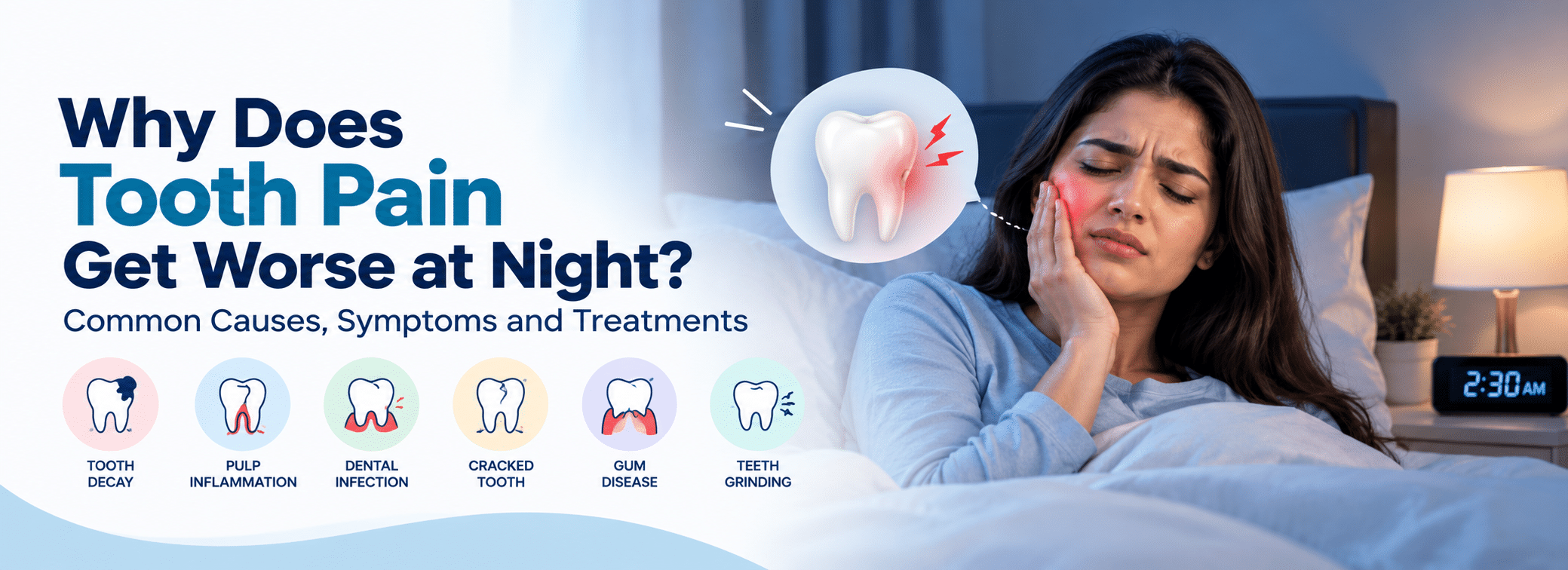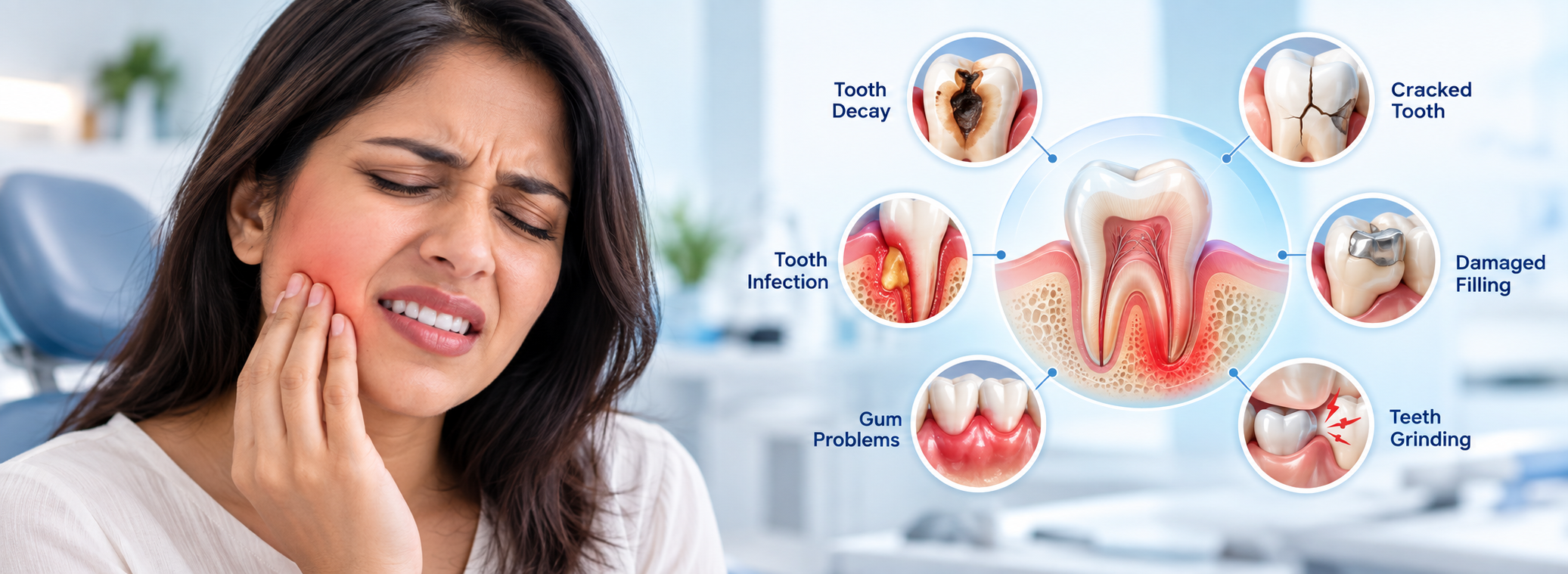
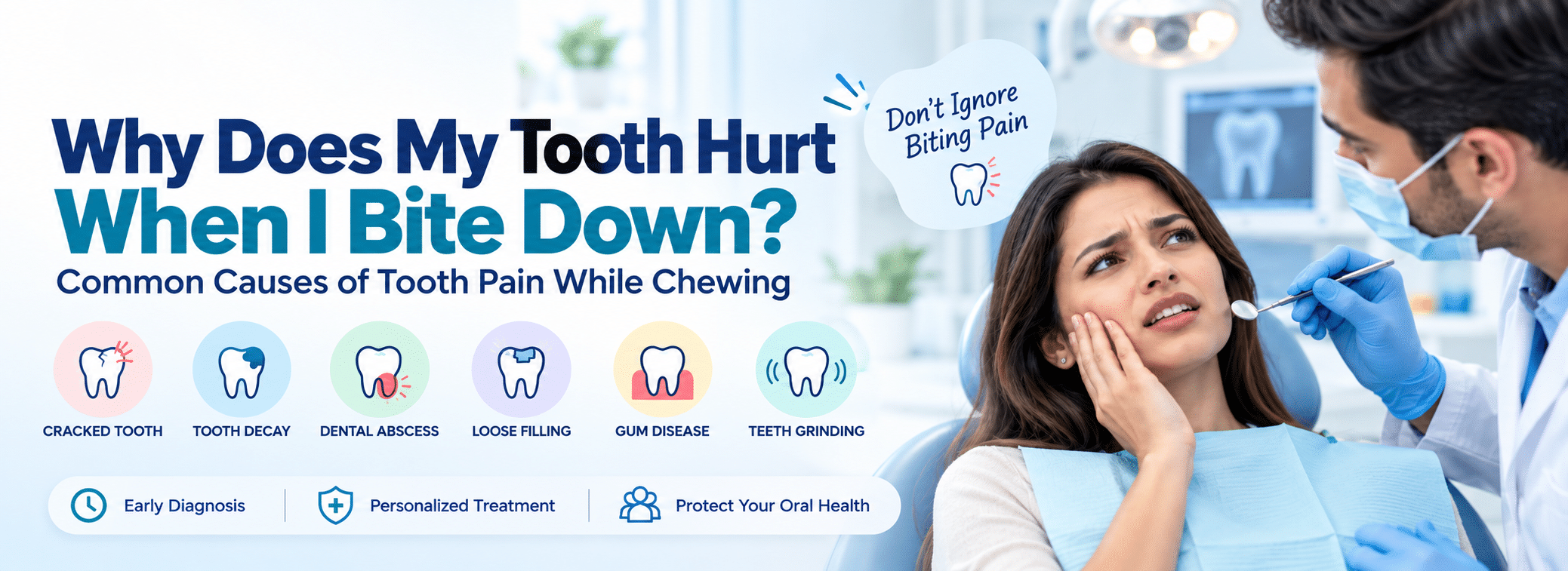
If your tooth hurts when biting down, it could be caused by a cracked tooth, tooth decay, a loose filling, gum inflammation, or an infection around the tooth root. The pain may feel sharp when chewing, appear only when pressure is applied, or continue after you finish eating.
Tooth pain when biting is a common dental complaint, but the underlying cause is not always visible. Sometimes, a tooth that looks healthy from the outside may have a small crack, an inflamed nerve, or a problem beneath an existing filling or crown.
Ignoring persistent biting pain may allow certain dental conditions to worsen. Understanding the possible causes can help you recognize warning signs and seek appropriate treatment.
Quick Answer: Why does my tooth hurt when I bite down?
A tooth may hurt when you bite down because pressure irritates a cracked tooth, inflamed tissue around the root, a deep cavity, or a damaged restoration. Pain when releasing your bite can be associated with a cracked tooth, while tenderness when applying pressure may occur with inflammation or infection. A dental examination is necessary to identify the cause and recommend treatment.
What Are the Common Causes of Tooth Pain When Biting Down?
1. Cracked Tooth
A cracked tooth is one of the important causes of sharp tooth pain when chewing.
Small cracks may develop from biting hard foods, teeth grinding, injuries, or weakened tooth structure.
When you bite, pressure can cause the cracked sections to move slightly, irritating the sensitive tissues inside the tooth.
Common symptoms:
- Sharp pain when biting or releasing pressure
- Sensitivity to hot or cold foods
- Pain that comes and goes
- Difficulty identifying the painful tooth
The American Association of Endodontists explains that cracked teeth can produce intermittent chewing pain and temperature sensitivity.

American Association of Endodontists
Treatment: Depending on the crack’s location and severity, treatment may involve bonding, a dental crown, root canal treatment, or extraction if the tooth cannot be saved.
2. Tooth Decay or Deep Cavities
Tooth decay occurs when acids produced by oral bacteria damage tooth enamel and dentin.
As a cavity becomes deeper, the tooth may become sensitive to chewing pressure, sweets, and temperature changes.
Treatment: Small cavities may require dental fillings. Extensive decay affecting the pulp may require root canal treatment or, when the tooth cannot be restored, extraction.
3. Tooth Infection or Dental Abscess
An infection inside a tooth can spread toward the root and surrounding tissues.
Inflammation around the root may make the tooth painful when pressure is applied.
Symptoms may include persistent throbbing pain, swelling, sensitivity, a bad taste, or fever.
A dental abscess requires professional treatment and does not reliably resolve on its own.

Cleveland Clinic
Treatment: Depending on the source, treatment may involve drainage, root canal treatment, periodontal treatment, or extraction. Antibiotics are prescribed only when clinically indicated and do not replace treatment of the infection’s source.
4. Loose or Damaged Dental Filling
An old filling may become loose, cracked, or worn.
This can expose sensitive tooth structure or create areas where chewing pressure causes discomfort.
Treatment: A dentist may repair or replace the filling after checking for underlying decay or cracks.
5. High Filling or Dental Crown
If a recently placed filling or crown is slightly too high, that tooth may contact the opposing teeth earlier than normal.
This can create excessive pressure during chewing.
Treatment: A dentist can check the bite and adjust the restoration if necessary.
6. Gum Disease and Periodontal Problems
Gum disease affects the tissues supporting the teeth.
Inflammation, periodontal pockets, or an abscess around a tooth may cause tenderness during chewing.
Other symptoms can include bleeding gums, swelling, bad breath, or tooth mobility.
Treatment: Depending on the diagnosis, treatment may include professional cleaning, scaling and root planing, drainage, or other periodontal procedures.
Cleveland Clinic
7. Teeth Grinding or Clenching
Bruxism places repeated pressure on teeth and the surrounding supporting tissues.
It may cause tooth tenderness, jaw discomfort, headaches, and tooth wear.
Treatment: A dentist may recommend a custom night guard, management of contributing factors, or treatment of existing tooth damage.
8. Food Trapped Between Teeth
Food particles lodged between teeth can irritate the gums and create pressure or tenderness.
Treatment: Gentle cleaning may relieve discomfort, but recurring food trapping should be examined because it may indicate an open contact, damaged restoration, or gum problem.
Why Does My Tooth Hurt Only When I Bite?
Some dental problems produce pain mainly when pressure is applied rather than continuous discomfort.
For example, a cracked tooth may hurt as its damaged sections flex during chewing. Inflammation around the root can make a tooth sensitive when biting forces compress its supporting tissues.
The pattern of pain provides clues, but symptoms alone cannot confirm the diagnosis.
Tooth Pain When Biting: Symptoms and Possible Causes
| Symptom | Possible cause |
| Sharp pain when biting or releasing pressure | Cracked tooth |
| Pain after a new filling or crown | High restoration or temporary irritation |
| Throbbing pain with swelling | Dental infection or abscess |
| Pain with hot, cold, or sweet foods | Cavity, crack, or pulp inflammation |
| Tender gums and pain while chewing | Gum disease or periodontal abscess |
| Morning tooth soreness with jaw tightness | Teeth grinding or clenching |
| Pain after eating with food trapped between teeth | Gum irritation or restoration problem |
These are possible explanations, not definitive diagnoses.
How Does a Dentist Diagnose Tooth Pain When Chewing?
A dentist will review your symptoms and examine the affected tooth and surrounding tissues.
Depending on the findings, diagnostic procedures may include:
1. Dental Examination
Checking for cavities, fractured teeth, damaged fillings, and gum inflammation.
2. Bite Test
Applying controlled pressure to individual parts of a tooth to identify pain associated with biting or releasing pressure.
3. Dental X-Ray
Evaluating decay, bone changes, root-related problems, and other conditions that may not be visible during examination.
Some cracks may not appear on routine X-rays.
4. Pulp Sensitivity Testing
Cold or other appropriate tests can help assess the condition of the tissue inside the tooth.
5. Bite and Gum Assessment
Checking tooth contacts, periodontal pockets, mobility, and the supporting structures.
The findings help determine whether treatment involves a filling, bite adjustment, crown, root canal, or periodontal care.
American Association of Endodontists
How to Relieve Tooth Pain When Biting Down at Home
Home care may temporarily reduce discomfort while you arrange a dental appointment.
- Avoid chewing on the painful side.
- Choose soft foods until the tooth is examined.
- Avoid very hard, sticky, or extremely hot or cold foods if they trigger pain.
- Maintain gentle brushing and oral hygiene.
- Rinse gently with warm salt water if your gums are irritated.
- Consider paracetamol or ibuprofen only if suitable for you, following the label or a pharmacist’s advice.
Do not place aspirin directly on your tooth or gums, repeatedly test the painful tooth by biting, or attempt to repair a cracked tooth yourself.
These measures provide temporary relief and do not treat underlying decay, cracks, or infections.
nhs.uk
When Should You See a Dentist for Tooth Pain When Biting?
Arrange a dental appointment if:
- Pain occurs repeatedly while chewing.
- The tooth becomes sensitive to pressure.
- Pain persists for more than one or two days.
- You notice a broken tooth, damaged filling, or swelling.
- The discomfort is becoming more frequent or severe.
Seek prompt dental care for suspected infection, significant swelling, fever, or severe pain.
Seek emergency medical care immediately if swelling causes difficulty breathing, swallowing, or speaking, or spreads around the eye or neck.

nhs.uk
Can Tooth Pain When Biting Go Away on Its Own?
Mild irritation after dental treatment or temporary gum inflammation may improve.
However, pain caused by a cracked tooth, deep cavity, or dental infection generally requires professional assessment and may need treatment.
Even if the pain disappears, the underlying problem may remain. For example, pain from an infected tooth can sometimes stop when the pulp loses vitality, while the infection continues.

Cleveland Clinic
How to Prevent Tooth Pain When Chewing
Although not every dental problem is preventable, good oral care can reduce several common risks.
- Brush twice daily with fluoride toothpaste.
- Clean between your teeth every day.
- Attend regular dental checkups.
- Avoid chewing ice and other very hard objects.
- Wear a protective mouthguard for contact sports.
- Ask your dentist about a night guard if you grind your teeth.
- Have damaged fillings and cavities evaluated early.
Frequently Asked Questions About Tooth Pain When Biting
1. Why does my tooth hurt when I bite down but not otherwise?
A cracked tooth, high filling, or inflammation around the root may cause pain mainly when pressure is applied. A dental examination is needed to identify the cause.
2. Can a cracked tooth hurt only when chewing?
Yes. Cracked teeth can cause intermittent pain when biting or releasing pressure, even without constant toothache.
3. Why does my tooth hurt when I bite after a filling?
The filling may be slightly high, or the tooth may have temporary sensitivity. Persistent or worsening pain should be checked by your dentist.
4. Does pain when biting mean I need a root canal?
Not necessarily. Treatment depends on the cause. Some teeth need only a filling or bite adjustment, while teeth with significant pulp damage may require root canal treatment.
5. Can gum disease cause tooth pain when chewing?
Yes. Inflamed or infected tissues supporting the tooth can cause tenderness when chewing.
6. Why does my molar hurt when I chew hard food?
Possible causes include a cracked cusp, cavity, damaged filling, or excessive pressure on the tooth.
7. Can teeth grinding cause pain when biting?
Yes. Repeated clenching or grinding can strain teeth and supporting tissues, causing tenderness.
8. How long should I wait before seeing a dentist?
Persistent or recurring biting pain should be evaluated promptly. Do not wait if you have swelling, severe pain, fever, or a suspected cracked tooth.
9. Can tooth pain when biting indicate an infection?
Yes. An infection around the tooth root or gums can cause pain when chewing, sometimes accompanied by swelling or throbbing discomfort.
10. What is the best treatment for tooth pain when biting?
The best treatment depends on the diagnosis. Options may include a filling, crown, bite adjustment, periodontal treatment, root canal treatment, or extraction.
Conclusion: Don’t Ignore Tooth Pain When Biting Down
If your tooth hurts when biting down, the cause may be a cracked tooth, cavity, damaged filling, gum disease, or infection.
While the pain may initially occur only during meals, recurring discomfort deserves attention.
A timely dental examination can help identify the problem, relieve pain, and improve the chances of preserving the affected tooth.
Experiencing Tooth Pain While Chewing? Book a Dental Consultation
Don’t let tooth pain interfere with your meals and daily routine.
Consult an experienced dentist for a proper examination and personalized treatment recommendation. Early diagnosis may help prevent avoidable complications and protect your oral health.