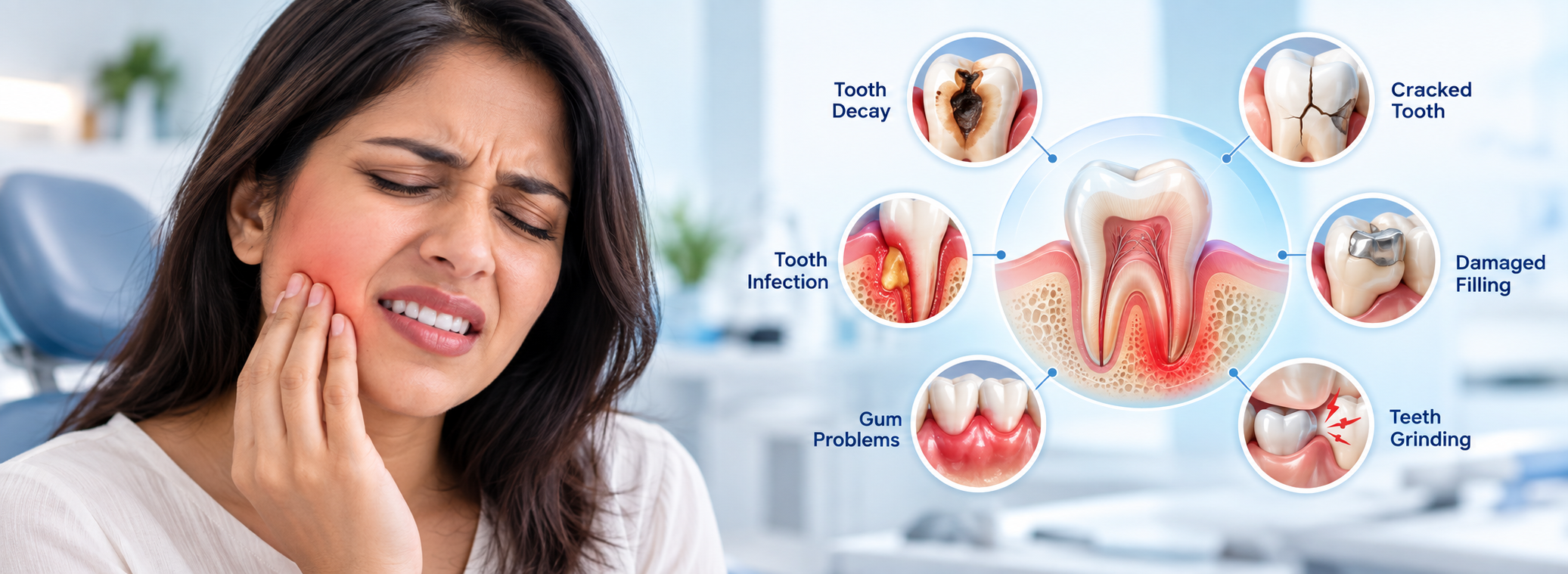
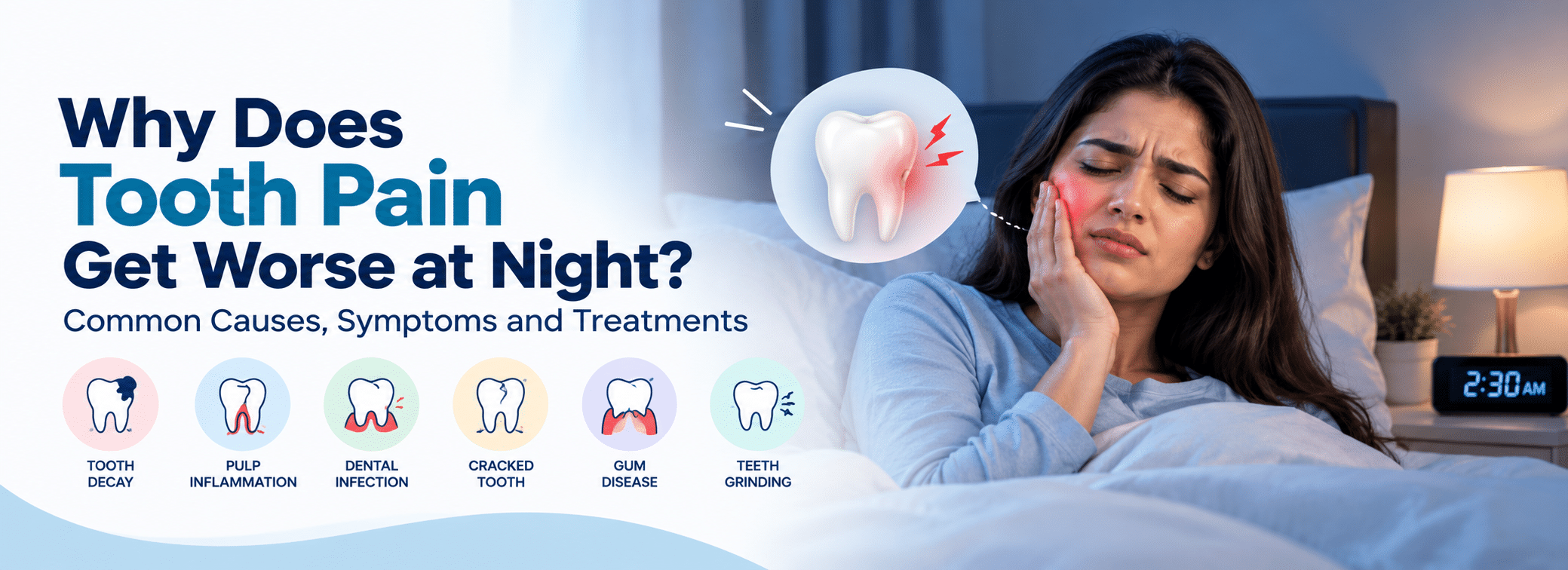
Tooth pain at night can feel more intense than discomfort experienced during the day. A mild toothache may become throbbing or persistent when you lie down, making it difficult to relax or sleep. Common causes include tooth decay, pulp inflammation, dental infections, cracked teeth, and nighttime teeth grinding.
Nighttime tooth pain can become more noticeable because there are fewer distractions, changes in head position may affect pressure sensations, and unconscious clenching or grinding can place additional stress on the teeth.
Although temporary measures may ease discomfort, recurring or severe toothache should not be ignored. Understanding the possible causes can help you recognize when professional dental treatment is necessary.
Quick Answer: Why does tooth pain get worse at night?
Tooth pain may feel worse at night because lying flat can increase pressure sensations in inflamed tissues, quiet surroundings make pain more noticeable, and sleep-related teeth grinding may aggravate sensitive teeth. Cavities, inflamed dental pulp, cracked teeth, and dental abscesses are common underlying causes. Elevating your head and using appropriate pain relief may help temporarily, but persistent tooth pain requires a dental examination.
2. Why Does Tooth Pain Become More Noticeable at Night?
Nighttime toothache is not always caused by a new dental problem. Existing inflammation or sensitivity may simply become more noticeable when you are trying to sleep.
1. Lying Down May Increase Throbbing Sensations
Some people experience stronger dental pain when lying flat. Changes in head position and pressure sensations around inflamed tissues may contribute to the discomfort.
Sleeping with your head slightly elevated can sometimes provide temporary relief.

NHS inform
+1
2. Fewer Distractions Make Pain More Noticeable
During the day, work, conversations, and other activities compete for your attention.
At night, the quieter environment may make existing tooth pain feel more prominent.
3. Nighttime Teeth Grinding
Sleep bruxism involves involuntary clenching or grinding of the teeth during sleep.
Repeated pressure can strain teeth and jaw muscles, contributing to tooth tenderness, headaches, and morning jaw discomfort.
JADA
4. Inflamed Dental Pulp Can Cause Spontaneous Pain
The pulp is the soft tissue inside a tooth containing nerves and blood vessels.
When it becomes severely inflamed, pain may occur without eating, drinking, or applying pressure. This can interrupt sleep.
5. Dental Infections Can Cause Persistent Throbbing
An infection around a tooth root may produce severe, persistent pain that worsens when lying down.
Some infections also cause swelling, fever, or a bad taste in the mouth.

NHS inform
3. What Are the Common Dental Causes of Tooth Pain at Night?
Tooth Decay and Deep Cavities
Tooth decay damages enamel and dentin. When a cavity progresses toward the pulp, sensitivity and pain may become more severe.
Possible symptoms: Sensitivity to sweet, hot, or cold foods, visible cavities, or persistent aching.
Treatment: Dental fillings, crowns, or root canal treatment may be recommended depending on the extent of damage.
Pulpitis: Inflammation of the Tooth Nerve
Pulpitis occurs when the dental pulp becomes inflamed, often because of deep decay, trauma, or a crack.
Mild inflammation may cause short-lived sensitivity. More severe, irreversible pulpitis can cause spontaneous pain or prolonged sensitivity that disturbs sleep.
Treatment: A dentist will assess whether the tooth can be restored with a filling or requires root canal treatment or another procedure.

ScienceDirect
Dental Abscess
A dental abscess is a collection of pus caused by infection.
It may produce intense throbbing pain, swelling, tenderness, and discomfort that spreads toward the jaw or ear.
Treatment: Depending on the source and severity, treatment may involve drainage, root canal treatment, periodontal treatment, or extraction.
Antibiotics are not routinely required for every toothache or localized dental infection. The dentist determines whether they are appropriate.

American Dental Association
Cracked or Damaged Tooth
A crack can expose sensitive tooth structures or irritate the pulp.
Pain may begin during chewing but become persistent if inflammation develops.
Treatment: Depending on the crack, options may include bonding, a crown, root canal treatment, or extraction.
Gum Disease
Inflammation or infection of the gums and supporting tissues may cause dull aching, tenderness, or pain around affected teeth.
Treatment: Professional cleaning, periodontal therapy, or treatment of a periodontal abscess may be necessary.
Sinus-Related Tooth Pain
Sinus inflammation can sometimes cause discomfort that feels like pain in the upper back teeth.
It may occur with nasal congestion, facial pressure, or other sinus symptoms.
Treatment: A dentist or appropriate medical professional can help distinguish dental pain from sinus-related discomfort.
4. Nighttime Tooth Pain: Symptoms and Possible Causes
| Symptom | Possible cause |
| Throbbing toothache while lying down | Pulp inflammation or dental infection |
| Sharp pain when biting | Cracked tooth or inflammation around the root |
| Pain that lingers after hot or cold drinks | Significant pulp inflammation |
| Toothache with facial swelling | Dental abscess or spreading infection |
| Jaw soreness after waking | Teeth grinding or clenching |
| Pain in several upper teeth with congestion | Possible sinus-related pain |
| Sensitivity after a recent filling | Temporary irritation or restoration-related problem |
These symptoms are clues, not a diagnosis. Several conditions can produce similar pain patterns.
5. How to Relieve Tooth Pain at Night Before Seeing a Dentist
Temporary home care may help you rest while arranging professional treatment.
Sleep With Your Head Slightly Elevated
Use an additional pillow or a comfortable raised sleeping position if lying flat makes the pain worse.
Use Appropriate Over-the-Counter Pain Relief
Paracetamol (acetaminophen) or ibuprofen may help temporarily, depending on your age, health conditions, and other medicines.
The American Dental Association recommends non-opioid pain relievers as first-line options for many acute dental pain situations when definitive treatment is not immediately available.

American Dental Association
Follow the product label and consult a pharmacist or clinician if you are unsure. Ibuprofen may be unsuitable for some people, including those with certain kidney problems, stomach ulcers, or pregnancy-related restrictions.
Rinse Gently With Warm Salt Water
For adults, a mild warm saltwater rinse may help soothe irritated gums. Do not swallow the rinse.
Avoid Trigger Foods
Avoid very hot, cold, sweet, or hard foods that worsen the discomfort.
Eat Soft Foods
Choose foods that require minimal chewing and avoid using the painful side of your mouth.
Maintain Gentle Oral Hygiene
Continue brushing carefully with a soft toothbrush.
Avoid: Placing aspirin directly against the gums, applying excessive heat to swelling, using leftover antibiotics, or attempting to drain an abscess yourself.
Home remedies may ease symptoms, but they cannot repair cavities, treat irreversible pulpitis, or eliminate the source of a dental infection.
6. When Is Nighttime Tooth Pain a Dental Emergency?
Seek an urgent dental appointment if tooth pain is severe, prevents sleep, is not controlled with appropriate pain relief, or is accompanied by swelling or fever.
A toothache that lasts more than two days also requires dental evaluation.

nhs.uk
+1
Seek emergency medical care immediately if you experience difficulty breathing or swallowing, rapidly spreading facial or neck swelling, swelling around the eye, or severe illness associated with a suspected dental infection.
These symptoms may indicate a serious spreading infection.
7. How Does a Dentist Treat Tooth Pain That Gets Worse at Night?
Treatment depends on the underlying cause rather than the time of day when the pain occurs.
| Dental problem | Possible treatment |
| Small or moderate cavity | Dental filling |
| Extensive tooth damage | Crown or other restoration |
| Irreversible pulp inflammation | Root canal treatment or extraction |
| Dental abscess | Drainage and treatment of the infection source |
| Cracked tooth | Crown, root canal treatment, or extraction depending on severity |
| Gum disease | Professional cleaning or periodontal treatment |
| Teeth grinding | Assessment and possibly a custom night guard |
A dentist may perform a clinical examination, dental X-rays, pulp sensitivity tests, and bite assessment to identify the cause.
8. Can Tooth Pain at Night Go Away on Its Own?
Some temporary sensitivity may improve, particularly after minor dental procedures.
However, persistent or worsening nighttime toothache should not be assumed to resolve without treatment.
Pain can occasionally decrease when the pulp inside a severely damaged tooth loses vitality. This does not necessarily mean the tooth has healed, and infection may continue to develop.
A dental examination is the safest way to determine whether treatment is needed.
9. How to Prevent Toothache at Night
- Brush twice daily with fluoride toothpaste.
- Clean between teeth every day.
- Limit frequent sugary snacks and drinks.
- Attend regular dental checkups.
- Have cavities and damaged fillings treated early.
- Avoid chewing ice and other hard objects.
- Discuss teeth grinding with your dentist if you experience morning jaw soreness.
- Do not ignore recurring tooth sensitivity or chewing pain.
Preventive care reduces the risk of many dental problems, although it cannot eliminate every cause of toothache.
10. Frequently Asked Questions About Tooth Pain at Night
1. Why does my tooth hurt more at night than during the day?
Lying down, fewer distractions, pulp inflammation, and nighttime teeth grinding can make existing tooth pain more noticeable.
2. Why does my tooth throb when I lie down?
Throbbing may be associated with inflammation inside the tooth or infection around its root. Some people experience stronger pressure sensations when lying flat.
3. How can I stop tooth pain at night immediately?
Try elevating your head, avoiding trigger foods, and using an appropriate over-the-counter pain reliever. These provide temporary relief, not a cure.
4. Does nighttime tooth pain mean I need a root canal?
Not necessarily. Cavities, cracks, gum problems, and other conditions can also cause pain. A root canal may be needed if the pulp is irreversibly damaged or infected.
5. Can a cavity cause severe tooth pain at night?
Yes. Deep cavities can irritate or inflame the dental pulp, causing spontaneous or persistent pain.
6. Can teeth grinding cause nighttime toothache?
Yes. Sleep-related clenching and grinding can place repeated pressure on teeth and supporting tissues.
7. Why does my toothache keep waking me up?
Severe pulp inflammation, infection, or other dental conditions may cause pain strong enough to interrupt sleep. Arrange prompt dental evaluation.
8. Can a dental abscess cause worse pain at night?
Yes. Dental abscesses can cause intense throbbing pain that may worsen when lying down. They require professional treatment.
9. Is it safe to sleep with a toothache?
Mild discomfort may not require emergency medical care, but persistent or severe pain needs dental attention. Swelling with breathing or swallowing difficulty is an emergency.
10. Should I visit a dentist if my tooth only hurts at night?
Yes, particularly if the pain is recurring, worsening, or interrupting sleep. The absence of daytime pain does not rule out a dental problem.
Conclusion: Don’t Ignore Tooth Pain That Gets Worse at Night
Tooth pain at night may be linked to tooth decay, pulp inflammation, dental infections, cracked teeth, or teeth grinding. Lying down and reduced distractions can make existing discomfort more noticeable.
Although temporary measures may help you sleep, persistent or severe toothache needs professional evaluation.
Early diagnosis can help relieve discomfort, address the underlying condition, and improve the chances of preserving the affected tooth.
Struggling With Tooth Pain at Night? Schedule a Dental Consultation
Don’t allow recurring toothache to disturb your sleep and daily routine.
Consult a qualified dentist for a thorough examination and a treatment plan based on the cause of your pain.