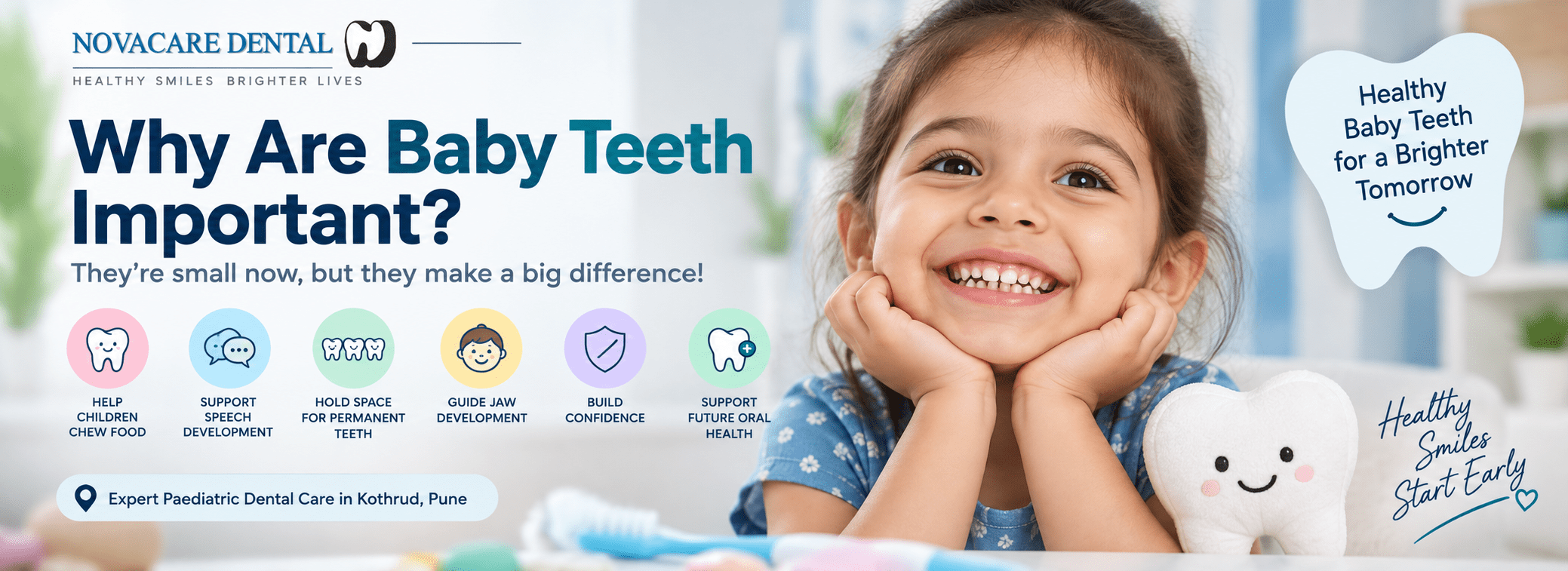
Baby teeth are important because they help children chew, speak, maintain space for permanent teeth and support normal oral development. Although baby teeth eventually fall out, they remain in a child’s mouth for several important years.
Parents sometimes assume that cavities or problems affecting baby teeth can be ignored because these teeth will eventually be replaced. However, untreated dental problems can cause pain, infection, difficulty eating and premature tooth loss.
Understanding the importance of baby teeth can help parents protect their child’s smile and establish healthy dental habits early.
If you are concerned about your child’s teeth, a paediatric dentist in Kothrud, Pune can evaluate their dental development and advise you on preventive care and treatment where required.
[INTERNAL LINK: Paediatric Dentistry in Kothrud, Pune]
Quick Answer: Why Are Baby Teeth Important?
Baby teeth, also called primary teeth or milk teeth, are important because they:
- Help children bite and chew food
- Support speech development
- Hold space for permanent teeth
- Help guide permanent teeth into position
- Support normal oral and jaw development
- Allow children to eat comfortably
- Contribute to a comfortable, healthy smile
Losing a baby tooth at the normal time is part of childhood development. Losing one too early because of decay, infection or injury can sometimes affect the space available for the permanent tooth that follows.
What Are Baby Teeth?
Baby teeth are a child’s first set of teeth.
Most children eventually develop 20 primary teeth. The first teeth commonly begin appearing during infancy, although eruption timing varies from child to child.
Primary teeth stay in the mouth for several years before gradually becoming loose and being replaced by permanent teeth.
Because they remain present throughout important stages of childhood growth, speech and nutrition, caring for them is important even though they are temporary.
When Do Baby Teeth Start Falling Out?
Many children begin losing their baby teeth at around six years of age, although the timing can vary.
The transition from primary teeth to permanent teeth continues for several years.
This means a baby tooth may need to function for a significant portion of childhood before it naturally falls out.
Why Are Baby Teeth Important? 6 Reasons Parents Should Know
1. Baby Teeth Help Children Chew Food
One of the main functions of primary teeth is helping children bite and chew food effectively.
Healthy teeth allow children to eat a varied diet comfortably.
When a tooth is painful, badly decayed or infected, chewing may become uncomfortable. A child may avoid certain foods or favour one side of the mouth.
Healthy baby teeth therefore contribute to comfortable eating during important years of growth and development.
2. Baby Teeth Support Speech Development
Teeth, lips and the tongue work together when children learn to pronounce sounds.
Baby teeth help support the development of clear speech, particularly during the years when children are learning new words and sounds.
Teeth can contribute to sounds such as:
- F
- V
- S
- Th
- Z
Speech development depends on many factors, so dental issues are not the only possible cause of pronunciation difficulties. However, healthy and appropriately positioned teeth form part of normal oral function.
3. Baby Teeth Hold Space for Permanent Teeth
One of the most important functions of baby teeth is space maintenance.
Each primary tooth occupies space that may later be needed by a permanent tooth.
When the permanent tooth is ready to erupt, it usually follows its developmental path into the space associated with the primary tooth.
What happens if a baby tooth is lost too early?
If a baby tooth is lost prematurely because of decay, infection or trauma, nearby teeth can sometimes move into the empty space.
This may reduce the room available for the developing permanent tooth and can contribute to spacing or alignment concerns.
This is one reason early loss of a baby tooth should be assessed rather than automatically ignored.
4. Baby Teeth Support Normal Oral and Jaw Development
Children’s teeth, jaws and facial structures continue developing throughout childhood.
Healthy primary teeth contribute to normal chewing and oral function during this period.
Regular dental assessments also allow dentists to monitor:
- Tooth eruption
- Tooth position
- Jaw development
- Early tooth loss
- Developing permanent teeth
- Bite-related concerns
This becomes especially useful as the child begins transitioning from primary teeth to permanent teeth.
5. Baby Teeth Help Children Eat and Speak Comfortably
A healthy mouth supports everyday activities such as:
- Eating
- Speaking
- Smiling
- Sleeping comfortably
- Participating in school and social activities
Toothache or infection can affect these activities even when the affected tooth is a temporary one.
The fact that a tooth will eventually fall out does not mean discomfort or infection should be left untreated.
6. Healthy Baby Teeth Support Future Oral Health Habits
Childhood is when many lifelong habits begin.
Starting brushing early, limiting frequent sugar exposure and attending regular dental visits can help children become familiar with oral care.
Early positive dental experiences may also make routine appointments feel more familiar as children grow.
Can Cavities in Baby Teeth Affect Permanent Teeth?
Baby teeth cavities should not be ignored simply because primary teeth eventually fall out.
Untreated decay can result in:
- Toothache
- Infection
- Difficulty chewing
- Sleep disturbance
- Premature tooth loss
- Swelling
- Damage to surrounding tissues
Severe dental infection may also create concerns around developing structures beneath or around the primary tooth.
For this reason, a dentist should assess cavities in baby teeth and determine whether preventive care, restoration, monitoring or another treatment is appropriate.
Dental authorities also emphasize that primary teeth are important for chewing, speech and maintaining space for adult teeth.
Do Cavities in Baby Teeth Need Treatment?
Sometimes, yes.
The appropriate treatment depends on factors such as:
- Child’s age
- Size and depth of the cavity
- Presence of pain
- Presence of infection
- Condition of the tooth
- How long the tooth is expected to remain
- Overall oral health
Treatment may help relieve pain, manage infection, preserve tooth function and reduce the risk of premature tooth loss.
A dentist should determine treatment based on the individual tooth rather than assuming that every baby tooth cavity requires the same approach.
[INTERNAL LINK: Paediatric Dentistry in Kothrud, Pune]
How to Keep Baby Teeth Healthy
Start Brushing When the First Tooth Appears
Dental care should begin when the first tooth erupts.
Parents or caregivers should clean the child’s teeth using an age-appropriate toothbrush and fluoride toothpaste according to professional recommendations.
The American Dental Association advises beginning brushing when teeth erupt and recommends an age-appropriate amount of fluoride toothpaste.
Brush Twice Daily
Establishing a regular morning and night brushing routine helps remove plaque and supports good oral hygiene habits.
Young children generally require parental help or supervision while brushing.
Limit Frequent Sugary Snacks and Drinks
Frequent sugar exposure increases the risk of dental decay.
Rather than focusing only on the total amount of sugar consumed, parents should also pay attention to how frequently teeth are exposed to sugary foods and beverages throughout the day.
Encourage Water Between Meals
Water is generally an appropriate drink between meals unless a healthcare professional has advised otherwise.
Repeated sipping of sugary beverages can increase tooth exposure to fermentable carbohydrates.
Attend Regular Dental Check-Ups
Regular dental visits allow the dentist to monitor:
- Baby tooth health
- Cavities
- Gum health
- Oral hygiene
- Tooth eruption
- Developing permanent teeth
- Bite and jaw development
Early identification may allow dental concerns to be managed before they become more uncomfortable or complex.
When Should a Child First Visit the Dentist?
A child’s first dental visit should generally take place by the first birthday or around the eruption of the first tooth, in line with guidance from major pediatric and dental organizations.
The American Academy of Pediatric Dentistry supports establishing dental care by age one, and the ADA similarly recommends establishing a dental home before age one.
Early dental appointments can help parents receive guidance about:
- Brushing
- Fluoride
- Feeding habits
- Teething
- Cavity prevention
- Oral habits
- Tooth development
The first visit is also an opportunity to help the child become familiar with the dental environment before a painful dental problem occurs.
What Happens at a Child’s Early Dental Visit?
Depending on the child’s age and needs, the dentist may:
- Examine the teeth and gums
- Check tooth eruption
- Look for early decay
- Assess oral hygiene
- Discuss brushing
- Discuss diet and sugar exposure
- Review fluoride needs
- Answer parents’ questions
- Monitor oral development
Treatment is planned according to the child’s age, dental condition and individual needs.
Novacare’s existing Paediatric Dentistry service specifically includes children’s dental examinations, preventive care, assessment of developing teeth, treatment of dental problems and oral-health guidance.
Common Myths About Baby Teeth
Myth 1: Baby Teeth Don’t Matter Because They Fall Out
Fact: Baby teeth help with chewing, speech, maintaining space for permanent teeth and normal oral development.
Temporary does not mean unimportant.
Myth 2: Cavities in Baby Teeth Don’t Need Treatment
Fact: Cavities can cause pain, infection and premature tooth loss.
Whether a cavity requires a filling or another treatment depends on the child’s individual dental condition.
Myth 3: Children Only Need a Dentist After All Baby Teeth Come In
Fact: Professional organizations recommend dental care much earlier.
An early dental visit can focus on prevention, oral-hygiene education and identifying developing dental problems.
Myth 4: A Child Has No Dental Problem If Nothing Hurts
Fact: Early decay and other dental changes may not always produce noticeable pain.
Regular check-ups can identify some problems before they become symptomatic.
Signs Your Child May Need a Dental Check-Up
Consider scheduling an appointment if your child has:
- Tooth pain
- White, brown or black areas on the teeth
- Visible cavities
- Swollen gums
- Difficulty chewing
- Sensitivity when eating or drinking
- A broken tooth
- Dental trauma
- Premature tooth loss
- Persistent bad breath
- Concerns about tooth eruption
Seek more urgent professional care for significant facial swelling, dental injury, severe pain or symptoms of spreading infection.
Novacare also lists emergency dental care among its services.
Paediatric Dentistry in Kothrud, Pune
Children’s dental care is different from simply treating smaller adult teeth.
A child’s dental treatment needs to consider:
- Age
- Developing teeth
- Oral habits
- Tooth eruption
- Cooperation level
- Cavity risk
- Existing dental problems
At Novacare Dental, Kothrud, Pune, paediatric dental care includes dental examinations for children, preventive oral care, assessment of developing teeth, treatment of dental concerns and oral-health guidance for parents.
[INTERNAL LINK: Paediatric Dentistry in Kothrud, Pune]
Frequently Asked Questions About Baby Teeth
Why are baby teeth important if they fall out anyway?
Baby teeth help children chew, develop speech, maintain space for permanent teeth and support normal oral development. They also allow children to eat and function comfortably while the permanent teeth are developing.
How many baby teeth do children have?
Most children eventually develop 20 primary teeth.
When do baby teeth start falling out?
Many children begin losing baby teeth at around six years of age, although the exact timing varies from child to child.
Can cavities in baby teeth affect permanent teeth?
Untreated decay can cause pain, infection and premature tooth loss. Severe dental infection can also affect tissues around developing teeth, so cavities in primary teeth should be professionally assessed.
What happens if a baby tooth falls out too early?
Nearby teeth may sometimes drift into the empty space, reducing the room available for the developing permanent tooth.
The effect depends on which tooth was lost, the child’s age and their stage of dental development.
When should my child first visit the dentist?
Major dental and pediatric organizations recommend establishing dental care by around the child’s first birthday.
Do baby teeth need fillings?
Some cavities in baby teeth may require restorative treatment.
The dentist considers the size of the cavity, symptoms, tooth condition, child’s age and how long the tooth is expected to remain before recommending treatment.
How can parents prevent cavities in baby teeth?
Good brushing habits, age-appropriate fluoride use, regular dental examinations and reducing frequent exposure to sugary foods and beverages can help lower the risk of tooth decay.
Is a paediatric dental visit necessary if my child has no pain?
Yes, routine dental visits can be useful even when a child has no symptoms because preventive care and dental-development monitoring do not depend on the presence of pain.
Why Protect Baby Teeth If They Eventually Fall Out?
Baby teeth are temporary, but their role is significant.
Healthy primary teeth help children:
- Chew comfortably
- Develop speech
- Maintain space for permanent teeth
- Support normal oral development
- Build healthy dental habits
Protecting baby teeth from decay and injury therefore contributes to a child’s current comfort as well as their developing oral health.
At Novacare Dental in Kothrud, Pune, parents can arrange a paediatric dental assessment for preventive care, tooth-development monitoring or concerns such as cavities, pain, early tooth loss or dental injury.
Need a Dental Check-Up for Your Child?
If you have questions about baby teeth, cavities, tooth eruption or your child’s oral health, schedule a dental visit at Novacare Dental, Kothrud, Pune.